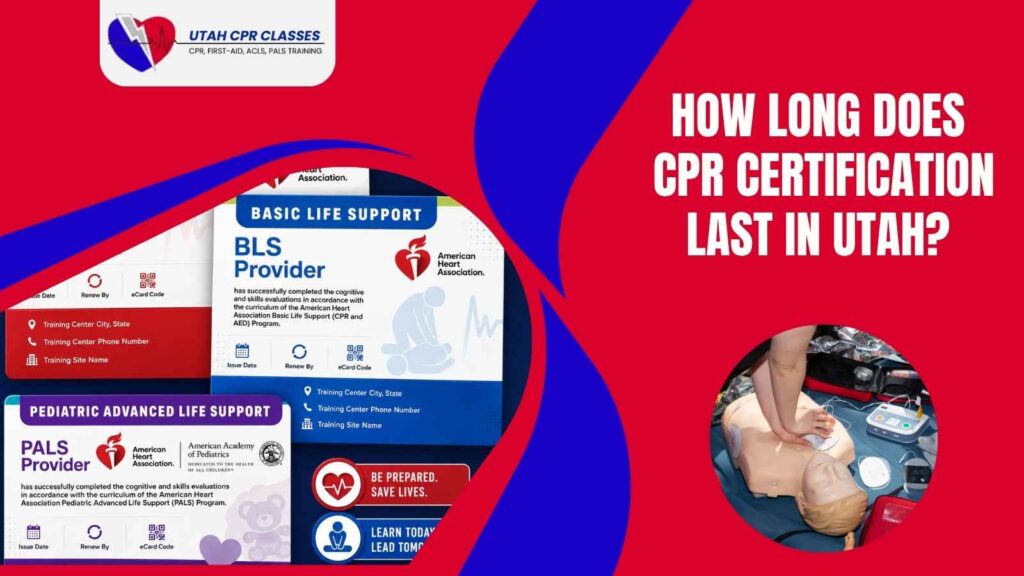
Are you wondering how long CPR certification lasts in Utah? It is valid for two years from the date it is issued, following national standards set by the American Heart Association (AHA) and the American Red Cross. After two years, the certification expires and is no longer officially valid, so timely renewal is important to keep your credentials current and your lifesaving skills up to date.
This time limit exists to keep CPR knowledge current with the latest emergency care updates from organizations like the International Liaison Committee on Resuscitation (ILCOR). To stay certified, you simply need to complete a renewal course before or soon after your expiration date. This helps you stay prepared, meet workplace requirements, and ensure your CPR skills match the most up-to-date life-saving guidelines.
CPR Certification Validity in Utah: What You Need to Know
In Utah, CPR certification follows standards set by trusted organizations like the American Heart Association (AHA) and the American Red Cross.
Across all approved training providers, the general structure is:
- Certification is valid for about 24 months
- Renewal is required after expiration to keep it active and recognized
- Once it expires, the credential is no longer considered valid
This applies uniformly across the state, whether you complete your training in American Fork, Bountiful, Clearfield, Draper, Murray, Ogden, Orem, Provo, Salt Lake City, Sandy, South Jordan, or St. George, or any other city in Utah.
Why CPR Certification Has an Expiration Date
CPR certification is time-limited for a clear and important reason. It ensures that trained individuals stay aligned with the latest emergency care guidelines and remain ready to respond effectively in real-life situations.
1. CPR Guidelines Are Updated Regularly
Organizations such as the International Liaison Committee on Resuscitation (ILCOR) continuously review new scientific research and update CPR recommendations when needed. These updates can include changes in compression rate, compression depth, AED usage steps, and rescue breathing methods. Keeping certification current ensures you are trained in the most accurate and evidence-based techniques.
2. CPR Skills Naturally Decline Without Practice
CPR is a hands-on skill that depends on physical performance, not just theory. Research supported by the American Heart Association shows that key skills like compression quality and timing can start to fade within months if they are not practiced regularly. Renewal training helps refresh these skills so you can perform CPR correctly and effectively when it matters most.
3. Renewal Supports Confidence During Emergencies
In high-pressure situations, even trained individuals may hesitate. Regular recertification helps reinforce the correct steps and builds muscle memory, allowing you to respond faster and with greater confidence. This preparedness can make a real difference in emergency outcomes when every second counts.
The Chain of Survival in Utah: How CPR Works in Real Emergencies
In Utah, CPR training follows a clear and structured system known as the Chain of Survival. This approach is used across the United States and helps guide people through the most important steps during a cardiac emergency.
The process includes:
- Early recognition of cardiac arrest
- Immediate start of CPR
- Quick use of an AED (Automated external defibrillator)
- Advanced care from emergency medical responders
- Post-resuscitation care and recovery support
This system is applied consistently across Utah and other nearby places. According to the Centers for Disease Control and Prevention (CDC), starting CPR quickly can significantly improve survival chances by maintaining blood flow to the brain and heart until professional help takes over.
How to Check Your CPR Certification Status in Utah
You do not need to guess or estimate when your CPR certification expires. In Utah, checking your status is quick and straightforward through a few trusted sources.
You can verify your certification by reviewing:
- Your physical or digital certification card, which lists both the issue and expiration dates
- The online account or certification portal provided by your training organization
- Your course provider sends email reminders or notifications before expiration
It is a good practice to check your expiration date several months in advance. This gives you enough time to schedule a renewal course, avoid last-minute stress, and ensure your certification remains active without any interruption.
What Happens When Your CPR Certification Expires?
Once your CPR certification expires, it is no longer considered valid or officially recognized. While your past training still has value, your certification status is no longer active, which may require a few important changes.
1. Loss of Active Certification Status
Once the expiration date passes, your name is no longer listed as actively certified by your training provider. Even though you may still remember the skills, the credential itself is no longer accepted as proof of up-to-date training.
2. Possible Impact on Employment and Compliance
In many Utah workplaces, such as hospitals, schools, childcare centers, and fitness facilities, employers require a valid CPR certification. If your certification has expired, it may not meet job or compliance requirements, which can affect your ability to work in certain roles.
3. Need for Full Renewal Training
If your certification has lapsed, some training providers may require you to retake the full CPR course instead of a shorter renewal class. This often depends on how long the certification has been expired and the provider’s policy.
In Utah, workplaces such as hospitals, schools, childcare centers, and fitness facilities, an expired certification can affect job eligibility or compliance with workplace safety standards. Keeping your certification up to date helps you avoid these issues and stay fully prepared for emergencies.
How to Renew Your CPR Certification in Utah
It is an easy process to renew your CPR certification in Utah when you complete it before your expiration date. Most training providers, including American Heart Association (AHA) certified centers, use a clear renewal structure that helps you refresh your skills and keep your certification active.
Step 1: Check Your Expiration Date
Start by reviewing your CPR certification card or digital record to confirm the expiration date, as recommended by the AHA. This helps you renew on time, maintain compliance with training standards, and ensure uninterrupted readiness to respond in emergencies confidently.
Step 2: Enroll in a Renewal Course
Register for an AHA-approved CPR renewal course from a recognized training provider. These refresher programs are designed for certified individuals and follow current AHA guidelines, ensuring your knowledge and skills stay aligned with the latest, evidence-based resuscitation practices.
Step 3: Refresh Your Knowledge and Practice Skills
Engage in structured learning based on updated AHA CPR guidelines. You will revisit essential concepts and practice hands-on skills like chest compressions and rescue techniques. This reinforces correct performance, builds muscle memory, and strengthens your ability to respond effectively in real emergencies.
Step 4: Complete the Skills Assessment
At the Self-Guided Station, you will demonstrate CPR skills, including high-quality chest compressions and AED use. This assessment follows AHA standards, allowing instructors to verify your competency and ensure you can perform effectively in real-world emergencies.
Step 5: Receive Your Renewed Certification
After completing all requirements, you will receive an AHA-recognized renewed CPR certification. This confirms your updated competence, ensures compliance with current guidelines, and validates your ability to provide safe, effective, and life-saving care when it matters most.
How to Keep Your CPR Skills Sharp Between Certification Renewals
CPR skills can gradually decline without regular practice, so staying consistent between renewals is essential. Simple, ongoing habits help you remain confident, accurate, and fully prepared to respond effectively in real-life emergencies when immediate action is critical.
1. Practice CPR Techniques Regularly
Regular short practice sessions help reinforce correct chest compression depth, hand placement, and proper rhythm. This consistent repetition strengthens muscle memory, improves speed, and ensures you can respond confidently and accurately during real emergencies without hesitation.
2. Stay Updated with CPR Guidelines
CPR guidelines are updated based on ongoing medical research and evidence-based practices. Following trusted organizations like the American Heart Association (AHA) or the Red Cross ensures you always use the latest, safest, and most effective techniques in emergency care situations.
3. Use Online Refresher Resources
Online videos, quizzes, and interactive tutorials provide an easy way to refresh CPR knowledge anytime. These resources help reinforce key steps, improve understanding, and keep your skills active and ready between formal training or certification renewal periods.
4. Take Part in Hands-On Practice When Possible
Hands-on practice using mannequins or simulation training improves confidence, accuracy, and decision-making. It helps you stay calm under pressure and ensures you can perform CPR effectively and efficiently in real-life emergencies where every second matters.
5. Explore Advanced CPR Training
Advanced CPR courses, such as ACLS and PALS, expand your knowledge and skill level. These programs prepare you to handle more complex emergencies with greater confidence, competence, and professional readiness in critical care scenarios.
6. Track Your Renewal Date Early
Setting reminders for your certification expiry date helps you stay organized and proactive. This ensures timely renewal, prevents certification gaps, and keeps you continuously compliant with workplace, training, or regulatory requirements without last-minute stress.
7. Keep Your Certification Records Organized
Keeping your CPR certification documents well-organized ensures quick and easy access when needed. It allows you to provide proof of training promptly for employment, volunteering, or compliance purposes without delays or confusion.
Renew Your CPR Certification in Utah Before It Expires
In Utah, CPR certification is generally valid for two years. After this period, it must be renewed through an approved course to stay aligned with the latest American Heart Association (AHA) and Red Cross guidelines. Keeping your certification current ensures your skills remain accurate, up to date, and reliable in real emergencies.
Renewing on time helps you stay compliant with workplace requirements and avoid any gaps in certification. If your expiration date is approaching, enroll early in a renewal course through Utah CPR Classes so you can maintain your credentials, stay confident in your skills, and remain prepared to respond effectively when it matters most.
FAQs About CPR Certification Validity in Utah
2. Can I Still Use My CPR Skills If My Certification Expires?
Yes. You may still remember the skills, but an expired certification is not officially valid in Utah workplaces. Most employers require a current certification to ensure compliance and verify up-to-date training.
2. Do All CPR Certifications in Utah Last the Same Amount of Time?
Most CPR certifications in Utah are valid for about two years, especially those issued by AHA or Red Cross–approved providers. However, the exact duration can vary slightly depending on the training organization, so it’s always best to check your certificate details.
3. What Happens If I Miss My CPR Renewal Deadline?
If you miss your renewal deadline, your certification may expire and no longer be valid for workplace or compliance purposes. Depending on how long it has been expired, you may need to retake the full course instead of a shorter renewal class.
4. Is CPR Renewal Different From Initial Certification?
Yes. CPR renewal courses are generally shorter and focus on refreshing your existing knowledge and skills. Initial certification is more detailed, while renewal is designed to update your training and confirm your competency.
5. Does CPR Certification From Utah Work in Other States of the U.S.?
Yes. CPR certifications from recognized providers like the AHA and Red Cross are generally accepted nationwide. This means your Utah certification is valid in most other U.S. states as well, depending on employer requirements.