Respond fast. Save young lives. Our PALS certification training equips healthcare professionals across Utah with the confidence and hands-on skills to manage pediatric emergencies with precision. Built on the latest American Heart Association guidelines, this interactive, scenario-based course prepares you to act quickly and effectively when caring for critically ill infants and children.
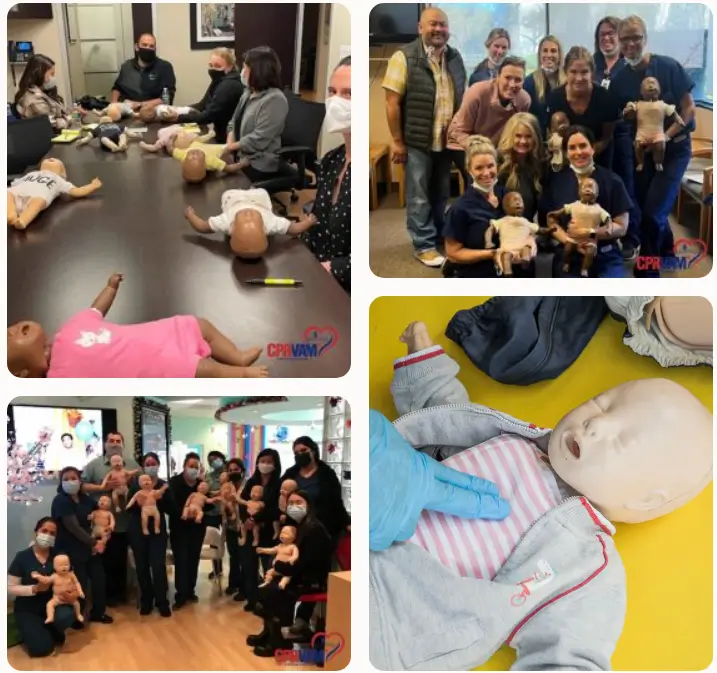
Our training is designed to be fast, flexible, and nationally recognized, helping students and healthcare professionals complete certification with confidence and ease.
Ideal for those who need to complete PALS certification for the first time or renewing an existing certification.
Ideal for Students Who Already Have Online Course Access or need to refresh their hands-on skills.
Our PALS certification courses are built to accommodate the demanding schedules of healthcare professionals across Utah. Whether you are completing PALS training for the first time or renewing your certification, we provide flexible class options that make the process efficient, practical, and stress-free.
Choose From:
Our courses are designed for nurses, physicians, EMTs, respiratory therapists, medical students, and other healthcare providers who need reliable certification options that fit around rotating shifts and busy schedules.
Pediatric Advanced Life Support (PALS) is an advanced emergency training program developed by the American Heart Association that prepares healthcare providers to recognize and manage life-threatening conditions in infants and children, including respiratory distress, shock, and cardiac arrest. The course focuses on early assessment, rapid intervention, and effective team-based resuscitation while incorporating advanced skills such as airway management, cardiac rhythm recognition, and clinical decision-making. Typically delivered through a blended format of online learning and hands-on skills testing, PALS ensures participants gain both theoretical knowledge and practical competence. Upon successful completion, learners receive a certification valid for 2 years that is widely accepted across hospitals, emergency services, and healthcare organizations.
Improves early recognition and response to pediatric respiratory and cardiac emergencies
Strengthens the ability to assess and manage pediatric shock effectively using AHA protocols
Enhances pediatric CPR quality, including correct compression and ventilation techniques
Develops proficiency in airway management and effective ventilation in infants and children
Improves ECG rhythm recognition for faster, more accurate clinical decision-making
Builds confidence and efficiency in team-based pediatric resuscitation scenarios
Our American Heart Association PALS course is designed to build advanced skills for managing pediatric emergencies in real clinical environments. The training focuses on improving your ability to quickly recognize deteriorating infants and children, respond using structured AHA algorithms, and deliver effective, life-saving interventions under pressure.
During the course, you will learn how to:
Hands-on megacode practice and simulation-based training are included to help you apply these skills in realistic scenarios and strengthen your confidence in responding to pediatric emergencies.
PALS certification is essential for healthcare professionals who routinely manage pediatric emergencies and life-threatening conditions involving infants and children. Pediatricians, emergency medicine physicians, pediatric nurses, ER nurses, and critical care staff working in PICU and NICU environments rely on PALS training to strengthen their ability to recognize respiratory distress, cardiac arrest, shock, and other pediatric emergencies. The certification equips providers with evidence-based protocols for rapid assessment, resuscitation, airway management, rhythm interpretation, and team-based emergency response. In Utah healthcare facilities, PALS certification is often mandatory for clinicians responsible for delivering immediate lifesaving pediatric care.
PALS certification is commonly required for physicians, physician assistants, nurse practitioners, registered nurses, and respiratory therapists working in hospitals and acute care environments where pediatric emergencies may arise unexpectedly. Healthcare professionals in emergency departments, surgical units, recovery rooms, and inpatient pediatric areas benefit from advanced pediatric emergency training to improve patient safety and response times. PALS courses teach providers how to quickly identify deterioration in infants and children, manage respiratory compromise, stabilize critically ill pediatric patients, and coordinate effective emergency interventions. Many Utah hospitals include PALS certification as part of mandatory credentialing and ongoing clinical competency requirements.
Paramedics, EMTs, firefighters, and other pre-hospital emergency responders often require PALS certification to effectively treat critically ill or injured infants and children during field emergencies. Pediatric patients present unique assessment and treatment challenges that differ significantly from adult care, making specialized training essential for EMS professionals. PALS certification prepares providers to manage pediatric airway emergencies, respiratory failure, seizures, shock, trauma, and cardiac arrest while maintaining safe transport practices. In Utah, many EMS agencies encourage or require PALS certification to ensure emergency responders can deliver rapid, confident, and evidence-based pediatric care before patients arrive at the hospital.
Anesthesiologists, certified registered nurse anesthetists (CRNAs), intensivists, and critical care specialists benefit greatly from PALS certification because pediatric patients require highly specialized monitoring and emergency management. Children are more vulnerable to airway complications, respiratory distress, and rapid physiological deterioration during surgery, sedation, and intensive care procedures. PALS training strengthens the ability of anesthesia and critical care teams to recognize early warning signs, perform advanced airway management, respond to cardiovascular emergencies, and deliver coordinated pediatric resuscitation. Many surgical centers, pediatric specialty hospitals, and intensive care units in Utah consider PALS certification an important qualification for clinicians caring for pediatric patients.
Students enrolled in nursing, medical, respiratory therapy, paramedic, and allied health education programs are frequently encouraged or required to obtain PALS certification before participating in pediatric clinical rotations or hospital-based training. Completing PALS certification early helps students build confidence in recognizing pediatric emergencies, communicating within healthcare teams, and applying lifesaving interventions in high-pressure situations. Training also introduces students to current pediatric resuscitation guidelines, emergency algorithms, and patient stabilization techniques that are commonly used in hospitals throughout Utah. Having PALS certification can strengthen a student’s resume and improve readiness for future employment in emergency medicine, pediatrics, or critical care specialties.
Healthcare professionals working in pediatric transport teams, urgent care clinics, outpatient surgery centers, and specialty pediatric practices often require PALS certification to safely manage unstable pediatric patients during transfers and emergency situations. These providers may encounter respiratory emergencies, allergic reactions, seizures, trauma, or sudden cardiac complications outside of traditional hospital intensive care settings. PALS training equips clinicians with the knowledge and practical skills needed to stabilize pediatric patients, manage advanced airways, administer emergency medications, and coordinate rapid escalation of care. In Utah, many specialty healthcare facilities and pediatric transport services require PALS certification to maintain high standards of patient safety and emergency preparedness.
Our PALS program is designed for healthcare providers who need reliable, hands-on pediatric emergency training that fits into busy clinical schedules. The course focuses on practical skill-building, real-world application, and full alignment with American Heart Association standards.
If you don’t pass on your first attempt, you can retake the class and skills assessment as needed until you successfully earn your certification. Our goal is to ensure you build real confidence in your CPR skills.
Our CPR certification training in Utah is American Heart Association (AHA) authorized, and our PALS certification meets AHA standards and is recognized by hospitals, emergency departments, and healthcare facilities nationwide.
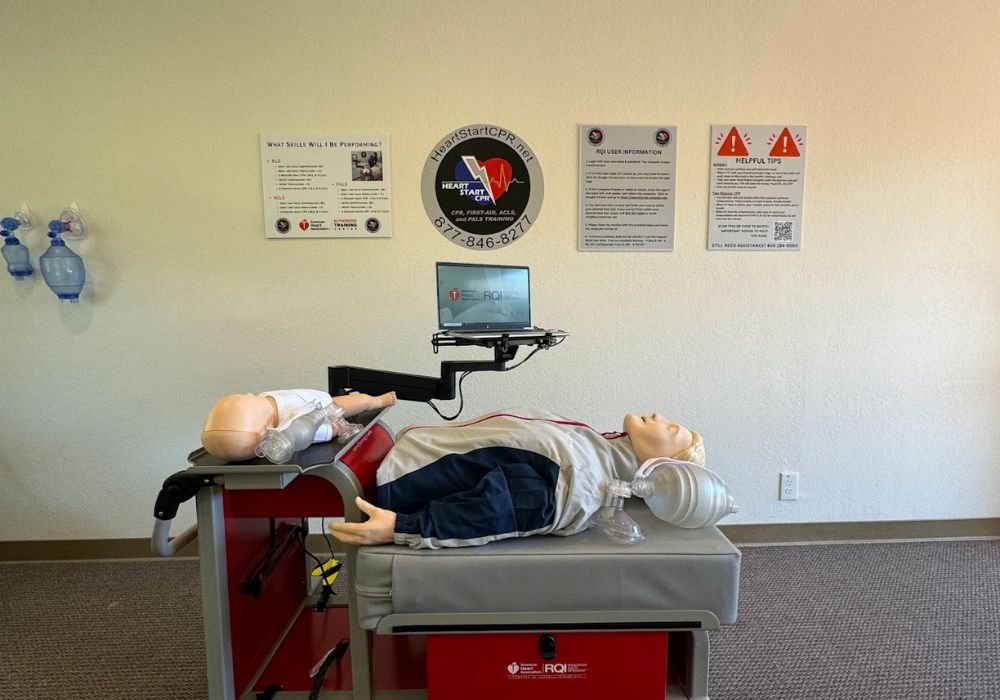
Gain experience through hands-on megacode scenarios, airway management practice, rhythm interpretation, and team-based resuscitation exercises designed for real clinical situations.
Choose from multiple class times, including weekdays, weekends, and evenings, so you can complete training without disrupting work or clinical responsibilities.
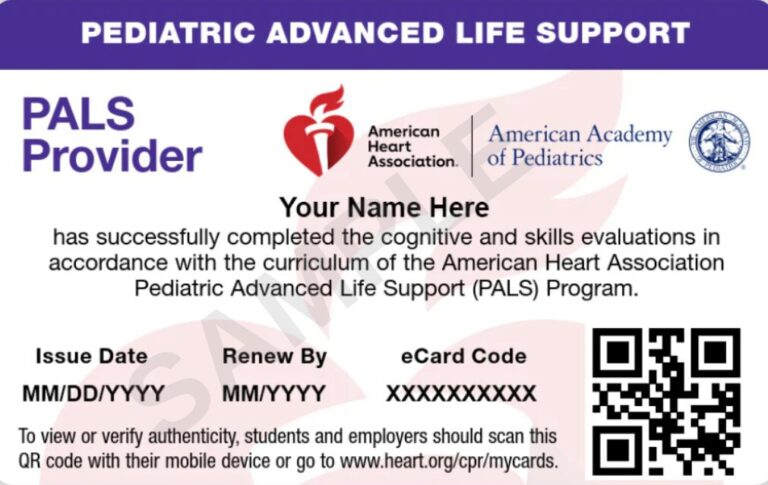
After successful completion of the course and skills check, your official PALS Provider eCard is issued promptly for immediate use.
Our support team is available throughout the week to help with enrollment, scheduling, and any questions related to your PALS certification process.


Our PALS Certification program offers fast, flexible, and AHA-compliant training with blended online learning and hands-on skills sessions. Complete your training at your convenience and receive your official American Heart Association eCard immediately after completion.
We provide on-site American Heart Association PALS certification training for hospitals, clinics, and healthcare organizations that need convenient group certification at their facility. Our instructors deliver hands-on pediatric emergency training, including megacode practice, CPR, airway management, AED use, and team-based resuscitation scenarios tailored to real clinical settings. With flexible scheduling for day, night, and rotating shifts, on-site PALS training helps teams stay compliant, improve coordination, and build confidence in managing pediatric emergencies without disrupting workplace operations.

Advanced Cardiovascular Life Support
Advanced training for healthcare professionals to recognize and manage cardiopulmonary emergencies.
Flexible & self-paced;
Hands-on practice
Trusted Certification

Basic Life Support
Specialized training to assess and stabilize pediatric patients in
emergency situations.
Flexible & self-paced;
Hands-on practice
Trusted Certification
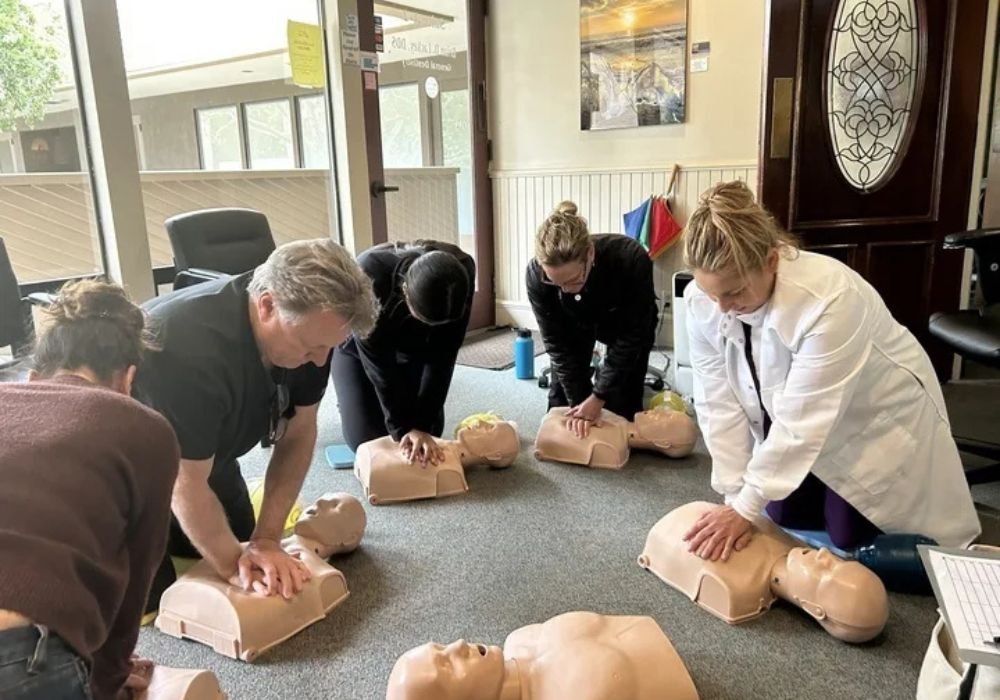
Get started with your PALS certification in Utah today with flexible scheduling made for healthcare professionals and students. Complete the online portion on your own time, attend a quick hands-on skills check, and receive your American Heart Association PALS eCard, valid for 2 years.
Yes. Most healthcare providers are expected to hold a current BLS certification before enrolling in a PALS course.
PALS is more advanced than BLS, but the structured training, practice sessions, and clear algorithms make it manageable for healthcare professionals.
No. While the knowledge portion can be completed online, an in-person skills evaluation is required for certification.
The exam covers pediatric assessment, CPR, airway management, shock recognition, ECG interpretation, and emergency response algorithms.
You typically only need a valid ID and confirmation of course completion; all training equipment is provided at the center.