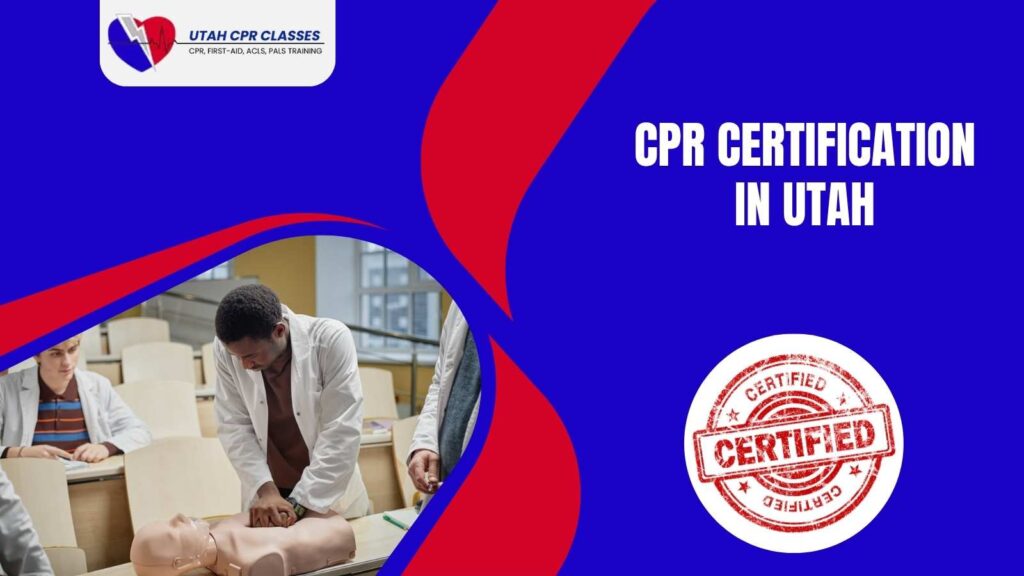
CPR certification in Utah is more than just a workplace requirement. It is a practical, life-saving skill that prepares you to respond confidently in real emergencies. In critical situations such as cardiac arrest, choking, or sudden breathing failure, CPR helps maintain oxygen and blood flow until emergency medical services arrive. Those first few minutes can make a life-changing difference.
In Utah, CPR certification is commonly required for healthcare professionals, teachers, childcare providers, fitness trainers, and workplace safety staff. Even when it is not mandatory, proper training ensures that you are prepared to act quickly and effectively when every second counts.
This blog covers everything you need to know about CPR certification in Utah, including requirements, training options, costs, renewal processes, and how to choose the right course for your needs.
What is Cardiopulmonary Resuscitation (CPR) Certification?
CPR certification is an official credential that confirms an individual has completed a recognized CPR training course and has the knowledge and hands-on skills required to perform cardiopulmonary resuscitation in emergencies.
Certification programs typically include training in:
- Adult CPR
- Child CPR
- Infant CPR
- Automated External Defibrillator (AED) use
- Choking response techniques
- Basic emergency assessment and response procedures
Most courses include both a practical skills test and a written or online knowledge assessment. After successful completion, participants receive a certification card that is typically valid for two years.
Why CPR Training and Certification Matter in Emergencies
CPR training and certification equip individuals with the skills to respond quickly and correctly during emergencies like cardiac arrest. It strengthens decision-making under pressure, improves survival chances through early intervention, and ensures people are prepared to act confidently when urgent situations arise.
Here is the importance of the CRP certification and training as follows:
1. Significantly Improves Survival Outcomes
When someone suffers sudden cardiac arrest, every second matters. According to the American Heart Association (AHA) and ILCOR, immediate CPR can double or even triple survival rates by keeping blood flowing to the brain and vital organs until emergency help takes over.
2. Helps Preserve Brain and Organ Function
The brain cannot survive long without oxygen, and damage can begin within minutes. ILCOR guidelines emphasize that CPR helps maintain limited circulation, slowing brain injury and improving the chances of a meaningful recovery once advanced care is provided.
3. Supports Rapid Emergency Response
Cardiac arrest often happens without warning, usually outside hospitals. The AHA highlights that trained bystanders play a life-saving role by recognizing the emergency quickly and starting CPR before medical responders arrive.
4. Reduces Risks Associated With Delayed Treatment
Every minute without CPR reduces survival chances by about 7-10 percent, according to AHA-supported research. Starting chest compressions immediately helps maintain circulation and keeps vital organs functioning during this critical window.
5. Enhances Recovery and Long-Term Outcomes
Early, high-quality CPR doesn’t just save lives. It improves recovery outcomes, too. AHA guidelines show that correct technique supports heart function recovery and reduces the risk of long-term brain damage.
6. Essential for Household and Community Safety
Nearly 70 percent of cardiac arrests happen at home, often involving family members, as noted by the American Heart Association. Knowing CPR means you can respond immediately when someone close to you needs help the most.
7. A Foundational Life-Saving Competency
Both AHA and ILCOR recognize CPR as a simple, essential skill designed for everyone. With basic training in compressions, emergency recognition, and AED use, anyone can step in confidently during a life-threatening situation.
Who Needs CPR Certification in Utah?
In Utah, CPR certification is essential for individuals working in roles where emergencies can happen unexpectedly. It is especially important in healthcare, education, childcare, fitness, and workplace safety, where a quick and effective response can save lives.
Healthcare Professionals
Healthcare workers are often required to hold Basic Life Support (BLS) certification. This includes nurses, physicians, medical assistants, dental staff, emergency medical technicians, and physical therapists. They must be prepared to respond immediately to medical emergencies.
Childcare Providers
Childcare professionals care for infants and young children who are more vulnerable in emergencies. Daycare staff, preschool teachers, nannies, and camp counselors are commonly required to maintain CPR certification to ensure child safety and a fast response when needed.
Educators and School Staff
Teachers, coaches, and school support staff are often encouraged or required to be CPR certified. This ensures they can respond quickly and confidently if a student or staff member experiences a medical emergency at school.
Fitness Professionals
Personal trainers and fitness instructors work in active environments where sudden health issues may occur. CPR and AED certification is commonly required in gyms and fitness centers to ensure client safety during exercise sessions.
Workplace Safety Personnel
Employees responsible for safety in workplaces such as offices, construction sites, and industrial settings may need CPR training. It helps them respond effectively to emergencies and supports overall workplace safety and preparedness.
What Types of CPR Certification Courses Are Available in Utah
In Utah, CPR certification courses are designed to match different skill levels and professional needs. These programs range from basic community training to advanced healthcare-level certification, ensuring individuals are properly prepared to respond to medical emergencies effectively and confidently.
Here are the courses we offer in Utah:
CPR and AED Certification
This is an entry-level course that teaches the core life-saving skills needed in everyday emergencies. It covers adult CPR, AED use, and how to respond to choking situations in a clear, step-by-step way. The training is designed for non-medical individuals and is commonly taken by teachers, fitness professionals, workplace staff, and members of the general public who want to be prepared to act confidently in emergencies.
Basic Life Support (BLS)
BLS is a more advanced certification designed specifically for healthcare providers and medical professionals. It focuses on delivering high-quality CPR, effective use of an AED, ventilation techniques, and team-based emergency response. This course is typically required for nurses, physicians, EMTs, and other clinical staff who must respond quickly and accurately in critical care situations.
Advanced Cardiovascular Life Support (ACLS)
ACLS is an advanced-level certification for experienced healthcare professionals managing serious cardiac emergencies. It includes training in airway management, ECG interpretation, medication use in resuscitation, and coordinated team response. This certification is commonly required for doctors, emergency room staff, intensive care units, and advanced emergency responders.
Pediatric Advanced Life Support (PALS)
PALS focuses on the emergency care of infants and children in critical conditions. It trains healthcare providers to assess pediatric patients quickly and manage respiratory or cardiac emergencies effectively. This certification is essential for pediatricians, pediatric nurses, and emergency care professionals working with young patients.
What are the CPR Certification Requirements in Utah
Utah does not require all residents to hold CPR certification, but requirements vary widely depending on your profession, workplace policies, and licensing or educational standards. In many cases, CPR certification is a mandatory condition for employment or professional practice, especially in safety-sensitive roles.
Because requirements are not universal, individuals should always confirm expectations with the appropriate authority before enrolling in a course. This may include:
- Employers who set job-specific safety requirements
- State licensing boards that regulate professional practice
- Educational institutions that require certification for programs or graduation
- Professional or regulatory organizations that define industry standards
For healthcare professionals in particular, CPR certification must meet recognized guidelines, most commonly those established by the American Heart Association (AHA). Hospitals and healthcare facilities typically require valid, up-to-date certification such as BLS, ACLS, and PALS, and other approved life-support training, depending on the role.
How to Get CPR Certified in Utah
Getting CPR certified in Utah is a simple, structured process that helps individuals gain essential life-saving skills. The process includes selecting the right course, completing training, and passing required assessments to receive recognized certification.
Steps to get CPR certified in Utah:
Step 1: Determine Your Certification Needs
- Identify the right certification based on your role or career
- Choose CPR/AED for basic life-saving skills
- Select BLS for healthcare providers and clinical roles
- Add ACLS for advanced cardiac emergency management
- Consider Pediatric CPR for infant and child care needs
- CPR and First Aid are ideal for complete general preparedness
Step 2: Choose an Approved Training Provider
- Enroll with a trusted and recognized training organization
- Ensure instructors are certified and experienced
- Look for hands-on practical training opportunities
- Confirm certification is accepted by employers or licensing boards
- Select flexible scheduling options that fit your availability
Step 3: Complete the Training
- Attend classroom sessions or online learning modules
- Practice real-life CPR, AED use, and emergency response skills
- Learn advanced techniques depending on the course level
- Complete all required course materials and activities
Step 4: Pass Required Assessments
- Demonstrate CPR or advanced skills in practical evaluations
- Complete written or online knowledge assessments
- Show correct technique, accuracy, and emergency readiness
- Meet all course competency standards successfully
Step 5: Receive Your Certification
- Earn official CPR certification after completing all requirements
- Receive a valid certification card or digital certificate
- Certification confirms your ability to respond in emergencies
- Typically valid for a set period before renewal is needed
How Long Does CPR Certification Take?
In Utah, CPR certification time varies based on the type of course and level of training required. Most programs are structured to be completed quickly while still ensuring proper hands-on practice and meeting recognized certification standards.
Below is a table showing the estimated training durations based on American Heart Association (AHA) guidelines:
| Course Tier & Target Audience | Format | Full Certification Time | Renewal / Review Time |
| Heartsaver CPR & First Aid | Instructor-Led / Blended | 4.5 – 5 Hours | 2-3 Hours Online + 1-2 Hours Hands-on |
| Basic Life Support (BLS) | Instructor-Led / Blended | 3.5 – 4 Hours | 1.5-2 Hours Online + 30-45 Mins Hands-on |
| Advanced Cardiovascular Life Support (ACLS) | Instructor-Led / Blended | 15 – 16 Hours (2 Days) | 4-5 Hours Online + 5-6 Hours Hands-on |
| Pediatric Advanced Life Support (PALS) | Instructor-Led / Blended | 14 – 15 Hours (2 Days) | 4-5 Hours Online + 5-6 Hours Hands-on |
How Much Does CPR Certification Cost in Utah?
The cost of BLS, ACLS, and PALS certification courses in Utah depends on the training provider, course format, and location. Pricing may also vary based on whether you are taking an initial certification or a renewal course. The table below outlines the typical cost ranges for each certification.
Below is the pricing for CPR certification courses in Utah:
| Certification Type | Estimated Cost |
| BLS Certification | $80–$110 |
| ACLS Certification | $150–$280 |
| ACLS Certification | $150–$280 |
CPR VAM offers Utah participants exclusive savings opportunities, including a 10% Military Discount, 5% off HeartCode® Complete/RQI Program registrations, and 20% off the Gold Package, which includes BLS, ACLS, and PALS certifications. Eligibility requirements and promotional codes may apply.
How Long Is CPR Certification Valid?
Most CPR certifications are valid for two years from the date of completion. After this period, renewal is required to keep your certification active and up to date with the latest American Heart Association (AHA) guidelines.
Your certification card typically includes:
- Completion date
- Expiration date
- Certification type
Keeping your CPR certification current ensures your skills remain aligned with the most recent safety and emergency response standards.
How Do You Renew CPR Certification in Utah?
To renew your CPR certification in Utah, you need to complete a CPR renewal course through a recognized training provider, demonstrate your CPR skills, and pass any required assessments. Most CPR certifications, including American Heart Association (AHA) CPR and BLS, are valid for two years and must be renewed before expiration.
The CPR renewal process typically includes:
- Check your certification expiration date: Make sure your current CPR card is still valid.
- Enroll in a CPR renewal course: Choose a certified provider offering CPR, BLS, First Aid, ACLS, or PALS renewal classes.
- Complete training and skills evaluation: Review updated CPR guidelines and demonstrate proper CPR, AED, and emergency response techniques.
- Receive your renewed certification card: After successful completion, you will receive an updated CPR certification card.
CPR renewal courses are usually shorter than initial classes and may take 1–4 hours, depending on the certification type. Renewing every two years helps ensure your skills remain current and meet workplace requirements.
How Do You Choose the Best CPR Training Provider in Utah?
Choosing the right CPR training provider in Utah is essential for ensuring high-quality education, real-world readiness, and nationally recognized certification. A trusted provider not only delivers proper instruction but also ensures your training meets American Heart Association (AHA) standards and workplace requirements.
Here are the ways you can choose the best CPR training provider in Utah:
1. Accreditation and Authorization
Always choose an AHA-authorized training provider. Accreditation ensures the course follows the latest science-based guidelines from the International Liaison Committee on Resuscitation (ILCOR). This guarantees your certification is widely accepted by employers, healthcare organizations, and regulatory bodies. Avoid non-authorized or “house” certifications, as they may lack national recognition.
2. Hands-On Training Experience
CPR is a hands-on skill that requires physical practice and real-world simulation. A high-quality provider should offer in-person or blended learning that includes practical skills sessions using mannequins and instructor feedback. This ensures you develop confidence, muscle memory, and the ability to respond effectively in real emergencies.
3. Instructor Qualifications
Look for instructors with real clinical or emergency response experience, such as paramedics, nurses, or firefighters. Experienced instructors bring real-life insight into training, helping students understand how CPR is performed under pressure, not just in theory. This significantly improves learning outcomes and preparedness.
4. Equipment and Training Quality
Modern CPR training should include updated equipment, such as feedback-enabled manikins that measure compression depth, rate, and technique. These tools ensure accurate skill development and improve long-term retention, giving students a more realistic and effective learning experience.
5. Flexibility and Accessibility
A reliable provider should offer flexible learning options, including weekend classes, evening sessions, hybrid courses, and group or onsite training. This ensures accessibility for students, professionals, and healthcare workers with different schedules and learning needs.
6. Reputation and Reviews
Check reviews, testimonials, and community reputation before choosing a provider. Positive feedback, repeat students, and partnerships with healthcare or educational institutions indicate strong trust and consistent training quality.
Read More: How Do You Choose the Best CPR Training Provider in Utah
What CPR Skills Will You Learn in Utah?
A CPR certification course in Utah is designed to build practical, life-saving skills that prepare you to respond confidently in real emergencies. The training follows American Heart Association (AHA) guidelines and focuses on both individual and team-based response techniques used in real-world situations.
Common CPR Skills Covered:
- Scene safety assessment and hazard identification
- Recognizing cardiac arrest and other life-threatening emergencies
- Activating emergency response systems quickly and correctly
- High-quality chest compressions with proper rate and depth
- Rescue breathing techniques for adults, children, and infants
- Safe and effective AED (Automated External Defibrillator) use
- Choking relief techniques for different age groups
- Team-based emergency response and coordination
Regular hands-on practice helps reinforce these skills, improve confidence, and ensure better performance during real-life emergencies.
What are the Benefits of CPR Certification Beyond Employment?
CPR certification is not only valuable for career growth but also provides essential life skills that prepare individuals to respond confidently in everyday emergencies. In Utah and beyond, many people pursue CPR training to improve personal readiness, support their families, and contribute to safer communities.
Key benefits include:
- Increased confidence during emergencies
- Enhanced community safety and awareness
- Greater preparedness to protect family and loved ones
- Improved leadership and decision-making skills in crises
- Valuable qualifications for volunteer opportunities
Overall, CPR training empowers individuals to act quickly and effectively when every second counts, helping save lives and strengthen community response.
Read More: Benefits of CPR Certification in Utah
Start Your CPR Certification Journey in Utah Today!
CPR certification provides essential life-saving skills that prepare you to respond quickly and effectively during medical emergencies. It helps you stay confident under pressure, follow correct procedures, and take immediate action when every second matters.
If you are in Utah, this is the right time to get started. Utah CPR Classes, an American Heart Association (AHA)–authorized training provider, offers professional BLS, ACLS, and PALS certification courses designed for healthcare professionals, educators, caregivers, and anyone committed to emergency preparedness. These courses combine hands-on training with real-world scenarios to ensure you are fully prepared to act in critical situations.
By completing your training, you not only earn a recognized certification but also gain the ability to make a real difference when lives are on the line.
Enroll today with CPR VAM in Utah and take the next step toward becoming confident, prepared, and ready to save lives.
FAQs About CPR Certification in Utah
1. Is CPR Certification Required in Utah?
CPR certification is not legally required for all residents in Utah. However, many employers in healthcare, education, childcare, and fitness require it as part of their job qualifications and safety standards.
2. Can I Complete CPR Certification Fully Online in Utah?
Some training providers in Utah offer online learning for the theoretical portion of CPR. However, most American Heart Association (AHA)–approved courses require an in-person skills session to complete certification and ensure hands-on competency.
3. How Often Do I Need to Renew my CPR Certification in Utah?
In Utah, CPR certification is typically valid for two years. Renewal is required to keep your certification active and ensure your skills reflect the latest AHA guidelines and emergency response practices.
4. Is BLS the Same as CPR Certification?
No. BLS (Basic Life Support) is more advanced than standard CPR certification. In Utah, it is primarily designed for healthcare professionals and includes advanced resuscitation skills and team-based emergency response.
5. Where is CPR Training Commonly Required in Utah?
CPR certification is commonly required across Utah in hospitals, clinics, schools, childcare centers, fitness facilities, and workplace safety roles. It helps ensure individuals are prepared to respond effectively in both public and professional emergencies.
6. Can Teenagers Get CPR Certified in Utah?
Yes. Teenagers in Utah are welcome to enroll in CPR certification courses. Many programs encourage early training to help build confidence and develop essential life-saving skills from a young age.
7. Does CPR Training Help in Public Emergencies in Utah?
Yes. CPR training is highly valuable in public emergencies in Utah. It prepares you to respond quickly in situations like cardiac arrest, choking, or sudden collapse until emergency medical services arrive.