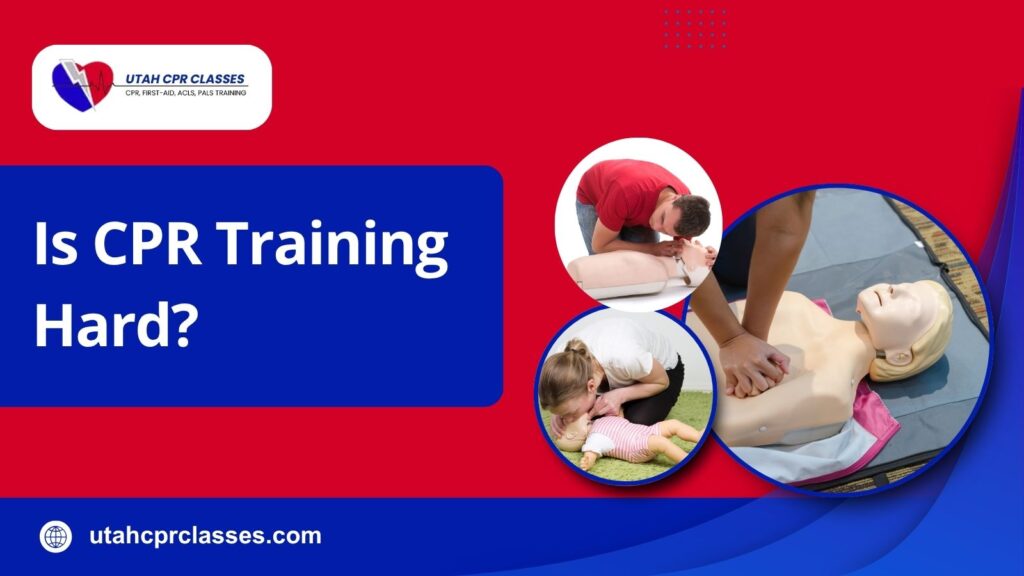
If you’re considering taking a standard CPR class, one of the first questions you may ask is, “Is CPR training hard?” The good news is that for most people, the answer is no. CPR (Cardiopulmonary Resuscitation) training is designed to be accessible, practical, and easy to follow, even if you have no medical background. However, advanced courses such as ACLS and PALS can be more challenging because they require prior medical knowledge and a deeper understanding of emergency care.
Whether you need CPR certification for your job, want to prepare for emergencies at home, or simply want to learn a valuable life-saving skill, CPR courses are structured to help you succeed. Certified instructors use demonstrations, hands-on practice, and realistic scenarios to help students build confidence and perform CPR effectively when it matters most.
In this guide, you’ll learn what CPR training involves, how difficult it really is, what to expect during a class, and why earning CPR certification is a valuable investment in your personal and professional life.
What Is CPR Training?
Standard CPR training teaches individuals how to respond effectively when someone experiences cardiac arrest, stops breathing, or is choking. The goal is to keep oxygen-rich blood flowing to the brain and vital organs until emergency medical services arrive.
A standard CPR certification course typically covers:
- Recognizing the signs of cardiac arrest
- Assessing the safety of an emergency scene
- Calling emergency services
- Performing high-quality chest compressions
- Providing rescue breaths when appropriate
- Using an Automated External Defibrillator (AED)
- Helping adults, children, and infants who are choking
Many training providers also combine CPR with First Aid and AED instruction, creating a more comprehensive emergency response course.
Is CPR Training Difficult for Beginners?
No. Standard CPR training is designed with beginners in mind.
You don’t need medical knowledge, healthcare experience, or previous emergency response training to complete a CPR course successfully. Certified instructors explain every concept step by step and allow plenty of time for practice before evaluating your skills.
Instead of focusing on complex medical terminology, CPR classes emphasize practical techniques that anyone can learn. Students are encouraged to ask questions, repeat skills, and build confidence throughout the course.
Because the training is interactive, most participants find it much easier than they expected.
Why CPR Training Is Easier Than Most People Think
Many people hesitate to sign up for a CPR class because they assume it will be difficult or require extensive medical knowledge. In reality, CPR training is designed to be simple, practical, and accessible for everyone. Whether you’re a first-time learner or renewing your certification, the course focuses on teaching essential lifesaving skills in a clear and supportive way.
Here are the main reasons why Standard CPR training is easier than most people expect:
1. No Medical Experience Is Required
One of the biggest misconceptions is that CPR courses are only for healthcare professionals. Most CPR training programs are created for the general public, including parents, teachers, coaches, office workers, and caregivers. Instructors explain each concept in plain language, so you don’t need any medical background to succeed.
2. Step-by-Step Instruction
CPR instructors break every skill into simple, easy-to-follow steps. Instead of overwhelming students with complex information, they demonstrate each technique before allowing participants to practice. This structured approach helps learners build confidence throughout the course.
3. Hands-On Practice Builds Confidence
Rather than relying only on lectures, CPR classes include hands-on practice using training manikins. You’ll learn proper hand placement, chest compression depth, compression rate, rescue breathing techniques, and how to use an Automated External Defibrillator (AED). Practicing these skills in a controlled environment makes them much easier to remember.
4. Supportive Learning Environment
CPR courses are designed to help students succeed, not to test them under pressure. Certified instructors provide guidance, answer questions, and offer feedback throughout the class. If you need extra practice with a technique, you’ll usually have the opportunity to repeat it until you feel comfortable.
5. Focus on Practical Skills Instead of Memorization
Unlike many educational courses, CPR training emphasizes doing rather than memorizing. The goal is to ensure you can recognize an emergency, perform effective chest compressions, use an AED, and assist someone who is choking. Repeated practice helps reinforce these skills naturally.
6. Modern CPR Guidelines Are Straightforward
Over the years, CPR guidelines have become simpler and easier to follow. Current training focuses on high-quality chest compressions, early activation of emergency medical services, and rapid AED use. These streamlined protocols make CPR easier to learn and remember during an emergency.
7. Most Students Complete the Course Successfully
CPR certification programs are designed so that the vast majority of participants can complete them successfully. Instructors evaluate your ability to perform the required skills and provide coaching along the way. For most beginners, earning a CPR certification is more about practicing the correct techniques than passing a difficult exam.
What Happens During CPR Training?
CPR training combines classroom instruction, hands-on practice, and a skills evaluation to prepare students to respond confidently during a cardiac or breathing emergency. While the exact format may vary depending on the certification level and training provider, most CPR courses follow a structured learning process that makes the material easy to understand and apply.
Classroom or Online Learning
The course begins with foundational knowledge about recognizing and responding to emergencies. Students learn when CPR is needed, how to assess the scene for safety, and the importance of calling 911 or activating the local emergency response system.
Topics typically include:
- Recognizing the signs of cardiac arrest
- The Chain of Survival
- When and how to call emergency services
- High-quality CPR techniques
- Rescue breathing
- AED (Automated External Defibrillator) basics
- Choking recognition and relief
Many organizations also offer blended learning, where students complete the knowledge portion online before attending an in-person skills session.
Hands-On Skills Practice
After learning the theory, students spend most of the course practicing CPR techniques on training manikins. This hands-on training helps build confidence and muscle memory while allowing instructors to correct technique in real time.
Students practice how to:
- Perform adult CPR
- Perform child CPR
- Perform infant CPR
- Deliver effective chest compressions
- Provide rescue breaths (when applicable)
- Use an AED safely
- Relieve choking in adults, children, and infants
Healthcare provider courses, such as Basic Life Support (BLS), may also include two-rescuer CPR and team-based resuscitation scenarios.
Skills Evaluation
Before certification is awarded, students complete a practical skills evaluation. Rather than focusing on difficult testing, the assessment confirms that students can perform CPR safely and effectively according to current guidelines.
During the evaluation, students are typically asked to demonstrate:
- Correct hand placement
- Proper compression depth and rate
- Full chest recoil
- Appropriate rescue breathing technique
- Safe AED operation
- Correct response to a choking emergency
Many modern training manikins provide real-time feedback on compression quality, helping students refine their skills before the evaluation.
Is There a Written Test?
Yes, many CPR certification courses include a written or online knowledge test, but it is generally short and straightforward. The purpose of the test is to confirm that you understand the key concepts of CPR and emergency response, not to challenge you with complex medical questions.
The exact testing requirements depend on the training organization, type of CPR course, and certification level. For example, a Basic Life Support (BLS) course for healthcare professionals may include a more comprehensive knowledge assessment than a community CPR course for the general public.
Is CPR Physically Difficult?
No, CPR is not physically difficult for most people, but it does require some physical effort and proper technique. CPR involves performing repeated chest compressions, which can become tiring, but training focuses on teaching the correct body position and methods to make the process easier and more effective.
Many people worry that they need to be extremely strong or physically fit to perform CPR. However, strength is not the main factor; proper technique, confidence, and practice are what matter most. CPR courses are designed to help beginners learn how to perform compressions safely and effectively, regardless of their medical background or fitness level.
Which CPR Course Is the Most Challenging?
The difficulty of a CPR course depends on its certification level and intended audience. Courses for the general public focus on basic lifesaving skills, while advanced life support courses are designed for healthcare professionals who manage complex medical emergencies.
For most people, Heartsaver CPR and CPR & First Aid courses are the easiest to complete. Basic Life Support (BLS) is more comprehensive, and Advanced Cardiovascular Life Support (ACLS) and Pediatric Advanced Life Support (PALS) are considered the most challenging because they involve advanced clinical knowledge, team-based resuscitation, and emergency decision-making.
| CPR Course | Difficulty | Designed For | What You’ll Learn |
| Heartsaver CPR | Easy | General public | Adult, child, and infant CPR, AED use, and choking relief |
| CPR & First Aid | Easy to Moderate | Workplaces and community members | CPR skills plus basic first aid for common injuries and emergencies |
| Basic Life Support (BLS) | Moderate | Healthcare professionals and students | High-quality CPR, AED use, two-rescuer CPR, and team dynamics |
| Advanced Cardiovascular Life Support (ACLS) | Advanced | Physicians, nurses, paramedics, and advanced healthcare providers | Advanced cardiac emergency management, ECG rhythm recognition, airway management, medications, and team leadership |
| Pediatric Advanced Life Support (PALS) | Advanced | Healthcare professionals treating infants and children | Recognition and management of pediatric respiratory and cardiac emergencies, advanced interventions, and team-based care |
How Long Does It Take to Learn CPR?
One of the biggest advantages of CPR training is that it doesn’t require a significant time commitment. Most people can learn the essential CPR skills in just a few hours, while more advanced certifications for healthcare professionals may take one or two days to complete.
The total course length depends on several factors, including the type of certification, the training format (instructor-led or blended learning), and whether you’re taking the course for the first time or renewing an existing certification.
Typical CPR Course Duration
| Course | Training Format | Initial Certification | Renewal / Blended Learning |
| Heartsaver CPR & First Aid | Instructor-Led or Blended | 4.5–5 hours | 2–3 hours online + 1–2 hours hands-on |
| Basic Life Support (BLS) | Instructor-Led or Blended | 3.5–4 hours | 1.5–2 hours online + 30–45 minutes hands-on |
| Advanced Cardiovascular Life Support (ACLS) | Instructor-Led or Blended | 15–16 hours (2 days) | 4–5 hours online + 5–6 hours hands-on |
| Pediatric Advanced Life Support (PALS) | Instructor-Led or Blended | 14–15 hours (2 days) | 4–5 hours online + 5–6 hours hands-on |
Tips to Make CPR Training Even Easier
CPR training is designed to be straightforward, but a little preparation can make the learning experience even smoother. Whether you’re attending your first CPR class or renewing your certification, these simple tips can help you learn more effectively, build confidence, and get the most out of your training.
Here are some of the ways you can make CPR training even easier:
Complete Any Required Online Learning in Advance
If you’re taking a blended learning course, complete the online portion before your scheduled skills session. Reviewing the course material ahead of time allows you to focus on practicing CPR techniques during the hands-on portion of the class.
Wear Comfortable Clothing
You’ll spend time kneeling on the floor and practicing chest compressions on a CPR manikin. Wear comfortable clothing and closed-toe shoes that allow you to move freely throughout the training.
Arrive Early
Getting to class a few minutes early gives you time to check in, settle down, and ask any questions before the course begins. Starting the class feeling relaxed can help you concentrate better.
Pay Attention During Demonstrations
Certified instructors demonstrate every CPR skill before students practice it. Watch these demonstrations carefully, as they show the correct hand placement, body position, compression technique, rescue breathing method, and AED operation.
Practice Every Skill
The more you practice, the more confident you’ll become. Take advantage of every opportunity to perform chest compressions, use the AED trainer, and practice responding to different emergency scenarios.
Hands-on repetition helps develop muscle memory, making it easier to recall the steps during a real emergency.
Ask Questions
If you’re unsure about any part of the training, don’t hesitate to ask your instructor. CPR courses are designed to be interactive, and instructors encourage students to ask questions to ensure they fully understand each technique.
Focus on Proper Technique, Not Speed
Many beginners worry about performing CPR quickly. During training, concentrate on using the correct technique first. Once you understand proper hand placement, compression depth, and body mechanics, maintaining the recommended compression rate becomes much easier.
Stay Relaxed and Confident
It’s normal to feel nervous before your first CPR class, but remember that the course is designed for beginners. Instructors provide guidance throughout the training, and most students successfully complete the certification on their first attempt.
Review Your Skills Regularly
CPR skills can fade over time if they’re not practiced. Reviewing the CPR sequence occasionally, watching refresher videos, or attending renewal courses every two years can help keep your knowledge and confidence up to date.
Is CPR Certification Worth the Effort?
Yes, CPR certification is well worth the effort. In just a few hours, you can learn lifesaving skills that may help you respond confidently during a cardiac arrest, choking emergency, or other life-threatening situation.
CPR certification also offers several personal and professional benefits, including:
- Learning how to respond during emergencies
- Building confidence to take action when every second counts
- Meeting CPR requirements for many jobs and professional licenses
- Improving your qualifications for healthcare, education, childcare, fitness, and public safety careers
- Gaining practical skills that can help protect your family, friends, coworkers, and community
Whether you’re taking CPR training for work or personal preparedness, the knowledge and confidence you gain can make a real difference when someone needs immediate help.
Your Path to CPR Certification Starts Here
So, is CPR training hard? For most people, the answer is no. Standard CPR courses are designed to be beginner-friendly, practical, and easy to follow, even for those with no medical experience. Through clear instruction, hands-on practice, and skills evaluations, students can quickly learn how to perform CPR, use an AED, and respond to emergencies with confidence. While advanced courses like ACLS and PALS require more medical knowledge and training, basic CPR certification is accessible to almost everyone. Whether you are completing CPR training for work, career requirements, or personal preparedness, the time and effort invested are small compared to the value of gaining a lifesaving skill that could help you make a difference when it matters most.
If you’re ready to become CPR certified, Utah CPR Classes can help you get started with confidence. Our American Heart Association (AHA)-aligned courses include hands-on Voice-Assisted Manikin (VAM) skills assessments, flexible class schedules, multiple convenient training locations across Utah, and same-day AHA eCards. Whether you need BLS, ACLS, PALS, or Heartsaver CPR certification, our experienced team provides the training and support you need to earn a nationally recognized credential. Register for a CPR certification course today and be prepared to save a life tomorrow.