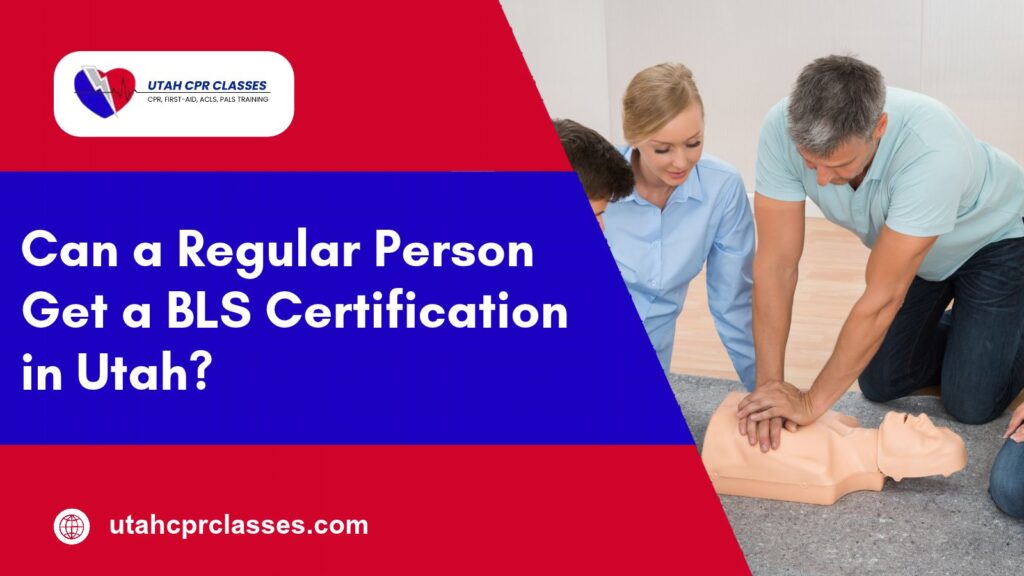
Yes, a regular person can get a BLS certification in Utah. You do not necessarily need to be a nurse, doctor, EMT, or other healthcare professional to learn Basic Life Support or complete a BLS course. BLS training is structured to teach practical emergency-response skills that can be learned through instruction, demonstration, practice, and skills assessment.
For someone without a healthcare background, BLS certification can be a useful way to develop the skills and confidence needed to respond to serious emergencies. It can also be valuable for people who work around children, older adults, customers, students, athletes, or other members of the public.
But what exactly does BLS certification involve, and why can someone without medical experience learn it? Let’s take a closer look.
What is a BLS Certification?
BLS stands for Basic Life Support. BLS certification demonstrates that a person has completed training in essential lifesaving techniques used during life-threatening emergencies.
BLS training commonly focuses on recognizing and responding to situations such as cardiac arrest and respiratory emergencies. Depending on the course, participants may learn how to perform high-quality CPR, use an automated external defibrillator (AED), provide rescue breaths, and respond to choking.
A BLS course typically combines knowledge with practical skills. Rather than simply learning information from a textbook, participants may practice emergency-response techniques and demonstrate that they can perform the required skills correctly.
Why Can a Regular Person Learn and Get BLS Certification?
A regular person can learn BLS because the training focuses on practical, step-by-step emergency-response skills rather than requiring advanced medical knowledge. Several factors make BLS training accessible to people without a healthcare background.
1. BLS Focuses on Practical Skills
BLS training teaches specific actions to take during life-threatening emergencies. Instead of requiring participants to understand complex medical procedures, the course focuses on practical skills such as CPR, AED use, rescue breathing, and responding to choking.
2. Training Is Taught Step by Step
BLS instructors demonstrate each skill and explain how and when it should be performed. Participants can then practice the techniques under guidance, making the learning process easier to follow.
3. You Don’t Need a Medical Background
You generally don’t need to be a doctor, nurse, EMT, or other healthcare professional to learn BLS. The fundamental techniques can be taught to people from different educational and professional backgrounds.
4. Hands-On Practice Builds Confidence
BLS courses commonly include hands-on practice. Participants can practice chest compressions, AED operation, rescue breathing, and other techniques so they become more familiar with the correct procedures.
5. The Training Focuses on Emergency Response
BLS does not require you to diagnose complicated medical conditions. Instead, it teaches you how to recognize certain emergencies, begin appropriate lifesaving measures, and continue providing support until additional help becomes available.
Who is BLS Certification Primarily Designed for?
Basic Life Support (BLS) certification is primarily designed for healthcare professionals and other trained responders who may need to provide immediate care during a life-threatening emergency. The BLS training is especially relevant to people who work directly with patients or are likely to encounter cardiac or respiratory emergencies as part of their job.
BLS certification is commonly pursued by:
- Nurses and nursing students
- Doctors and medical students
- EMTs and paramedics
- Medical assistants
- Dentists and dental professionals
- Healthcare technicians
- Hospital and clinical staff
- Other healthcare providers involved in patient care
How Does a BLS Certification Benefit a Regular Person?
BLS certification can provide a regular person with practical lifesaving skills that may be useful in an emergency. Even if you don’t work in healthcare, knowing how to respond when someone suddenly becomes unresponsive or stops breathing can help you act quickly and confidently.
1. Helps You Respond to Cardiac Emergencies
BLS training teaches you high-quality CPR, and it can help you respond immediately while waiting for emergency medical services to arrive.
2. Teaches You How to Use an AED
An automated external defibrillator (AED) can be an important part of the response to cardiac arrest. BLS training can teach you when and how to use an AED safely, helping you feel more prepared if one is available during an emergency.
3. Builds Confidence During Emergencies
Hands-on BLS practice gives you an opportunity to learn the correct procedures before you encounter a real emergency, which can improve your confidence and readiness to act.
4. Improves Your Emergency Preparedness
BLS certification provides practical training in CPR, AED use, rescue breathing, and other emergency-response techniques that can be useful at home, at work, or in public settings.
5. Can Strengthen Your Job Qualifications
Some employers require or prefer employees who have current BLS or CPR credentials. Having BLS certification may therefore be useful when applying for positions in healthcare, childcare, education, fitness, senior care, and other fields where emergency-response skills are valuable.
6. Can Support a Future Healthcare Career
If you’re considering becoming a nurse, EMT, medical assistant, dental professional, or another healthcare worker, learning BLS can introduce you to fundamental emergency-response skills before entering the profession.
7. Helps You Protect People Around You
BLS skills aren’t only useful for patients in a healthcare setting. A medical emergency can happen to a family member, friend, coworker, student, customer, or stranger. Knowing how to respond can help you provide immediate assistance until professional medical help takes over.
8. Provides Recognized Training
Completing an appropriate BLS course provides documentation that you have completed the required training. This can be useful when an employer, school, or organization asks for proof of current BLS certification.
9. Encourages a Preparedness Mindset
BLS training helps you think through what to do during an emergency instead of having to figure everything out in the moment. Regular training and renewal can also help you maintain familiarity with lifesaving techniques.
What Workplaces Prefer Regular Employees With BLS Certification?
If you’re a regular person considering BLS certification, you may be wondering whether having this credential can help you at work. While BLS certification is most commonly associated with healthcare professionals, many jobs outside healthcare can also benefit from employees who know CPR, AED use, and basic emergency-response skills.
Depending on the employer and position, BLS certification may be required, preferred, or simply viewed as an additional qualification.
1. Childcare and Daycare Workplaces
If you work with infants or children, BLS and CPR skills can be especially valuable. Childcare centers and daycare facilities may look for employees who are trained to respond to emergencies involving the children in their care.
If you’re interested in becoming a childcare worker, having current BLS or CPR certification can make you a more prepared candidate.
2. Schools and Educational Settings
Teachers, school staff, coaches, and other employees who regularly supervise students may benefit from BLS certification.
As a regular employee in a school, you could be one of the people present when a student experiences a medical emergency. Knowing how to respond while waiting for professional help can be an important workplace skill.
3. Gyms and Fitness Centers
If you work as a fitness instructor, personal trainer, gym employee, or sports coach, BLS certification can be a valuable addition to your qualifications.
Because you may work with people during physical activity, knowing how to respond to a cardiac emergency and use an AED can help you feel more prepared at work.
4. Senior Care and Assisted-Living Facilities
Regular employees working with older adults may encounter situations where immediate emergency assistance is needed. Caregivers and other staff members may therefore benefit from BLS or CPR training.
Some employers may require a specific certification depending on the position and level of responsibility.
5. Community and Recreation Centers
If you work at a recreation center, community facility, summer camp, or similar setting, you may be responsible for groups of people. BLS training can give you practical skills for responding to serious emergencies.
6. Sports and Athletic Organizations
Coaches, athletic staff, sports instructors, and recreation employees may benefit from BLS certification because they work around people participating in physical activities.
If you’re pursuing one of these jobs, having BLS training can demonstrate that you’re prepared to respond to certain emergencies.
How to Get BLS Certification as a Regular Person in Utah?
If you are a non-healthcare professional interested in BLS certification in Utah, start by determining why you need the certification.
1. Check the Requirements
Ask your employer, school, training program, or organization whether it requires:
- AHA BLS Provider
- BLS certification
- CPR/AED certification
- First Aid/CPR/AED
- Another specific CPR credential
This is important because different courses serve different purposes.
2. Choose the Appropriate BLS Course
If your requirement specifically calls for an AHA BLS Provider Course, choose an AHA-authorized course that meets the applicable requirements.
The AHA currently offers BLS through classroom and blended-learning formats. Both formats teach the same AHA science-based skills and lead to the same BLS Course Completion eCard when the requirements are successfully completed.
3. Complete the Required Learning
You will learn essential BLS concepts and skills, including CPR, AED use, ventilation, recognition of cardiac arrest, and team-based resuscitation.
4. Complete Hands-On Skills Training
BLS certification involves practical skills. If you take the blended-learning route, you complete the online learning component and then attend a hands-on skills session.
For Utah EMS licensing, BEMS specifically states that approved CPR courses must include an in-person skills evaluation completed by an instructor.
5. Complete the Course Requirements
After successfully completing all applicable course requirements, you receive your BLS Provider Course Completion eCard.
The AHA states that the BLS completion card is valid for two years.
Can You Get BLS Certification Online in Utah?
You can complete the online portion of a BLS blended-learning course, but an online-only course does not satisfy a BLS certification requirement that requires hands-on skills verification.
The American Heart Association offers BLS through blended learning, which combines online coursework with a hands-on skills session. It also offers instructor-led classroom training. This distinction matters because BLS is a practical skill.
If you see a course advertised as “100% online BLS certification,” check whether the credential will be accepted by your employer, school, or licensing authority before enrolling. For EMS professional licensing in Utah, BEMS requires an in-person skills evaluation for approved CPR courses.
Therefore, online learning can be part of BLS certification, but it should not automatically be assumed that an online-only certificate meets every Utah workplace or professional requirement.
Is BLS Certification Worth It for a Regular Person?
BLS certification can be worthwhile for a regular person when the training matches their needs.
It can be particularly valuable if you:
- Work around patients or vulnerable populations
- Are entering a healthcare program
- Are preparing for a healthcare-related career
- Work for an employer that requires BLS
- Want professional-level CPR and AED training
- Frequently work in environments where emergencies could occur
However, BLS is not automatically the best CPR certification for everyone.
If your only goal is to learn how to perform CPR and use an AED, a general CPR/AED course may provide the training you need. If your employer or school specifically requires BLS Provider certification, then completing an appropriate BLS course makes more sense.
Take the Next Step Toward BLS Certification
A regular person can get BLS certification in Utah without being a healthcare professional. BLS training provides practical skills such as CPR, AED use, rescue breathing, and emergency response, which can help you feel more prepared to handle life-threatening situations. It can also benefit people working in childcare, education, fitness, caregiving, and other fields where emergency skills are valuable. If you’re considering BLS certification, choose a course that fits your goals and meets your employer, school, or organization’s requirements.
If you’re ready to put these skills into practice, Utah CPR Classes can help you get started. Utah CPR Classes provides BLS certification in Utah and has trained numerous students throughout the state. With modern training technology, a friendly learning environment, and live feedback, we help you practice effectively and improve your skills. We offer American Heart Association BLS certification, accepted nationwide, with same-day certification available. You can schedule your class at a convenient time, and we also offer ACLS and PALS certification courses and training if you need them.
Book your class today and get certified conveniently at a location near you.