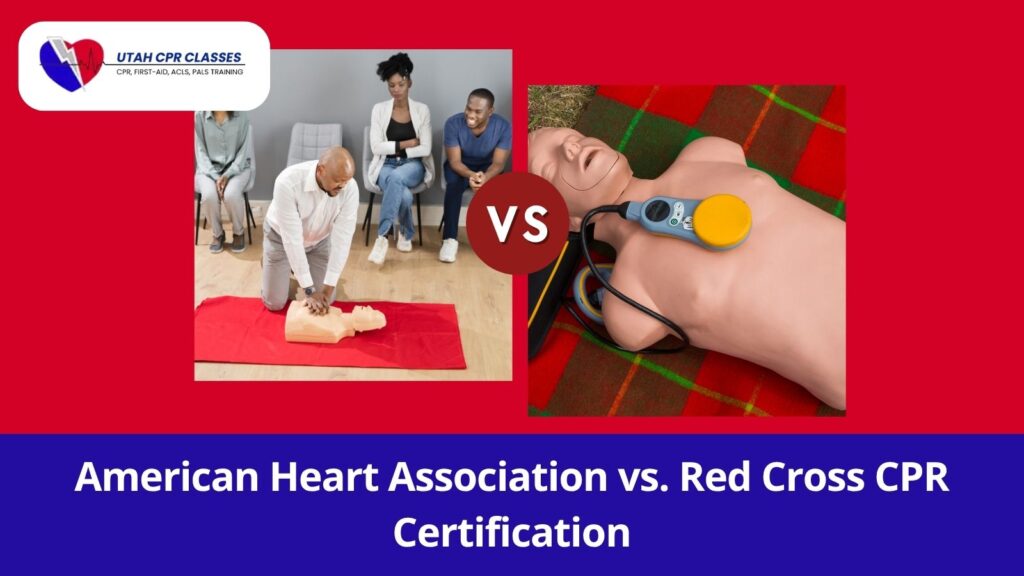
Choosing the right CPR certification can be challenging, especially with two of the most recognized organizations in emergency training: the American Heart Association (AHA) and the American Red Cross (ARC). Both organizations provide trusted CPR, AED, and emergency response training designed to prepare individuals to respond during life-threatening situations such as cardiac arrest, choking, and breathing emergencies.
While both AHA and Red Cross CPR certifications are widely accepted, they differ in areas such as course offerings, training approach, target audience, healthcare recognition, and employer requirements. AHA certification is often preferred in healthcare settings and advanced life support training, while Red Cross certification is widely recognized for workplace, community, and general CPR education.
This comparison blog highlights the key differences between AHA and Red Cross CPR certification to help you choose the right option based on your needs.
What is CPR Certification?
CPR certification is an official credential that confirms an individual has completed training in cardiopulmonary resuscitation (CPR) and learned how to respond during life-threatening emergencies such as cardiac arrest, choking, and breathing emergencies. CPR certification courses teach essential skills, including chest compressions, rescue breathing, automated external defibrillator (AED) use, and emergency response techniques for adults, children, and infants.
CPR certification is offered by recognized organizations such as the American Heart Association (AHA) and the American Red Cross (ARC) and is commonly required for healthcare professionals, teachers, childcare providers, fitness trainers, and workplace employees. Most CPR certifications are valid for two years, after which renewal training is recommended to maintain updated skills and knowledge.
What is American Heart Association CPR Certification?
The American Heart Association (AHA) is a leading organization dedicated to cardiovascular health research and emergency cardiovascular care. Its CPR training programs are widely recognized in hospitals, healthcare systems, medical schools, and emergency services. AHA courses follow the latest evidence-based resuscitation guidelines and emphasize team-based emergency response and high-quality CPR skills.
Popular AHA CPR courses include:
- Heartsaver CPR AED
- Heartsaver First Aid CPR AED
- Basic Life Support (BLS)
- Advanced Cardiovascular Life Support (ACLS)
- Pediatric Advanced Life Support (PALS)
Healthcare employers across the United States commonly require AHA certification for clinical positions.
What is American Red Cross CPR Certification?
The American Red Cross has provided emergency preparedness and first aid education for more than a century. Its CPR certification programs are designed for both the general public and workplace safety.
Red Cross courses teach CPR, AED use, choking relief, and first aid through flexible learning formats, including online coursework and blended learning.
Common Red Cross courses include:
- Adult CPR/AED
- Adult and Pediatric CPR/AED
- First Aid/CPR/AED
- Basic Life Support (BLS)
Many employers outside healthcare accept Red Cross CPR certification.
AHA vs Red Cross CPR Certification: Key Differences
While both the American Heart Association (AHA) and the American Red Cross (ARC) offer nationally recognized CPR certification programs, they differ in several areas, including their target audience, course offerings, employer acceptance, and training approach. Understanding these differences can help you choose the certification that best meets your personal or professional needs.
Here are the basis on which the American Heart Association (AHA) and the American Red Cross (ARC) differ:
| Comparison Factor | American Heart Association (AHA) | American Red Cross (ARC) |
| Primary Focus | Specializes in cardiovascular health and evidence-based emergency cardiac care. | Focuses on humanitarian services, disaster relief, and community health and safety education. |
| Target Audience | Primarily designed for healthcare professionals and medical students. | Ideal for the general public, workplace employees, educators, and childcare providers. |
| Course Offerings | Offers CPR, Heartsaver, BLS, ACLS, and PALS courses. | Offers CPR/AED, First Aid, Adult & Pediatric CPR, and BLS courses. |
| Training Approach | Emphasizes high-quality CPR, team-based resuscitation, and clinical emergency response. | Focuses on practical CPR, AED use, and emergency response for everyday situations. |
| Employer Acceptance | Preferred or required by many hospitals and healthcare employers. | Widely accepted by schools, businesses, childcare centers, and many non-healthcare employers. |
| Best For | Individuals pursuing or working in healthcare careers. | Individuals seeking CPR certification for work, school, or personal preparedness. |
1. Mission and Organizational Focus
The American Heart Association (AHA) is primarily focused on advancing cardiovascular health and improving outcomes for people affected by heart disease and stroke. Its CPR certification programs are developed using the latest evidence-based resuscitation guidelines and are designed to prepare participants to respond effectively to cardiac and respiratory emergencies, particularly in healthcare settings.
In contrast, the American Red Cross (ARC) is a humanitarian organization whose mission extends beyond CPR training to include disaster relief, blood donation, emergency assistance, and community health education. While its CPR courses also teach lifesaving skills based on current emergency care practices, they are designed to serve a broader audience across workplaces, schools, and community organizations.
2. Target Audience
American Heart Association CPR certification is primarily intended for healthcare professionals and students entering medical fields. It is commonly required for nurses, physicians, EMTs, paramedics, dental professionals, respiratory therapists, and other clinical personnel who need CPR certification to meet employer or licensing requirements.
Conversely, American Red Cross CPR certification is well suited for the general public and professionals outside traditional healthcare settings. It is a popular choice for teachers, childcare providers, coaches, fitness instructors, lifeguards, workplace employees, and anyone who wants to gain lifesaving skills for personal or professional preparedness.
3. Course Offerings
The American Heart Association offers a comprehensive range of CPR and advanced life support courses, including Heartsaver CPR AED, Heartsaver First Aid CPR AED, Basic Life Support (BLS), Advanced Cardiovascular Life Support (ACLS), and Pediatric Advanced Life Support (PALS). These programs support everyone from first-time learners to experienced healthcare providers.
On the other hand, the American Red Cross provides CPR and first aid courses such as Adult CPR/AED, Adult and Pediatric CPR/AED, First Aid/CPR/AED, and Basic Life Support (BLS). While its courses cover essential lifesaving skills, it does not offer advanced certifications like ACLS and PALS.
4. Course Content and Training Approach
The American Heart Association emphasizes evidence-based CPR techniques, high-quality chest compressions, team-based resuscitation, and healthcare-specific emergency scenarios. Its training is designed to prepare participants for responding to medical emergencies in clinical environments where coordinated care is essential.
By comparison, the American Red Cross focuses on practical CPR, AED use, first aid, and emergency response for everyday situations. Its courses are designed to help participants respond confidently to emergencies at home, in workplaces, schools, sports facilities, and other community settings.
5. Employer Acceptance
Many hospitals, healthcare systems, and medical employers specifically require American Heart Association (AHA) certification, particularly Basic Life Support (BLS), because it aligns with their clinical training standards and emergency response protocols. For healthcare professionals, AHA certification is often the preferred or mandatory credential.
Meanwhile, American Red Cross CPR certification is widely accepted by schools, childcare centers, businesses, fitness facilities, and many other employers. Although some healthcare organizations also recognize Red Cross certification, applicants should always verify employer requirements, as certain clinical positions specifically require AHA credentials.
6. Learning Formats
The American Heart Association offers instructor-led classroom training and blended learning, allowing students to complete the online coursework before attending an in-person skills session. These formats ensure participants receive both theoretical instruction and practical experience.
Similarly, yet with greater flexibility, the American Red Cross provides in-person classes, blended learning, and selected online coursework. Depending on the course and employer requirements, participants may still need to complete a hands-on skills assessment to receive an accepted certification.
7. Hands-on Skills Assessment
For American Heart Association courses, hands-on skills practice and practical evaluation are an essential part of earning certification. Participants must demonstrate competency in CPR techniques, AED use, and other required skills before successfully completing the course.
Likewise, American Red Cross certification programs that meet workplace or healthcare requirements also include a practical skills assessment. This evaluation ensures participants can correctly perform CPR and other lifesaving techniques before receiving certification.
8. Certification Validity and Renewal
American Heart Association CPR certification is generally valid for two years. To maintain an active credential and stay current with the latest resuscitation guidelines, participants should complete a renewal course before their certification expires.
Likewise, American Red Cross CPR certification is also typically valid for two years. Renewal courses help participants refresh their knowledge, strengthen practical skills, and maintain compliance with employer or organizational requirements.
9. Cost Comparison
The cost of American Heart Association CPR certification varies depending on the course level, training provider, location, and whether additional certifications such as First Aid or AED are included. Advanced courses like BLS, ACLS, and PALS generally cost more because they involve specialized instruction and skills testing.
In comparison, American Red Cross course pricing also varies based on the course type and training provider. Basic CPR and First Aid courses are often more affordable than advanced healthcare certifications, making them a practical option for workplace training and personal preparedness.
10. Best Choice for Healthcare Professionals
The American Heart Association is generally the preferred choice for healthcare professionals because many hospitals, clinics, and medical employers specifically require AHA certification. Its advanced programs, including ACLS and PALS, also support career advancement in healthcare.
By contrast, the American Red Cross may be suitable for healthcare professionals only if their employer accepts its certification. Before enrolling, healthcare workers should confirm that the credential meets their workplace or licensing requirements.
11. Best Choice for Non-Healthcare Professionals
For individuals outside the healthcare field, American Heart Association certification is an excellent choice if an employer specifically requests it or if they plan to pursue a healthcare career in the future. It provides training that aligns closely with clinical standards used in many medical settings.
Alternatively, American Red Cross certification is often the better fit for teachers, childcare providers, coaches, parents, workplace employees, and community members who want to learn CPR for everyday emergencies. Its flexible course options and broad acceptance across non-medical industries make it a popular choice for general CPR training.
Which Certification Should You Choose?
Choosing between American Heart Association (AHA) and American Red Cross (ARC) CPR certification depends primarily on your employer’s requirements, career goals, and the type of certification you need. Both organizations provide high-quality CPR training that teaches essential lifesaving skills, but one may be a better fit depending on your situation.
Choose American Heart Association (AHA) CPR Certification If You:
- Your employer, hospital, or licensing board specifically requires AHA certification.
- You work or plan to work in a healthcare setting.
- You need Basic Life Support (BLS), Advanced Cardiovascular Life Support (ACLS), or Pediatric Advanced Life Support (PALS) certification.
- You want a certification that is widely preferred by hospitals and healthcare organizations.
- You may pursue a healthcare career in the future.
Choose American Red Cross (ARC) CPR Certification If You:
- Your employer, school, or organization accepts Red Cross CPR certification.
- You only require do not need advanced courses like ACLS or PALS.
- A Red Cross training provider offers a more convenient class schedule or location.
- You prefer a nationally recognized certification that meets your employer’s requirements.
Get Certified with a Trusted AHA Training Provider
Both American Heart Association (AHA) and American Red Cross (ARC) CPR certifications provide high-quality training and teach essential lifesaving skills, including CPR, AED use, and emergency response techniques. The right choice depends on your career goals, workplace requirements, and the type of training you need. AHA certification is often preferred by healthcare professionals because of its clinical focus and advanced courses, while Red Cross certification is widely chosen by workplaces, educators, caregivers, and individuals seeking practical CPR and first aid skills. Before selecting a certification, review your employer’s or organization’s requirements to ensure you choose the credential that best matches your professional or personal needs.
If you are looking for a trusted provider of American Heart Association CPR certification in Utah, Utah CPR Classes offers comprehensive CPR, BLS, ACLS, and PALS training designed for healthcare professionals, workplaces, and individuals. With more than two decades of experience and hundreds of thousands of participants trained, we provide convenient certification courses across multiple cities near you. Our experienced instructors deliver hands-on, guideline-based training to help you gain the confidence and skills needed to respond effectively in real emergencies. Enroll with Utah CPR Classes today and get certified with a proven CPR training provider you can trust.