Personal trainers in Utah should maintain current CPR, AED, and First Aid training when required by their fitness facility, employer, certification organization, or insurance provider. For personal trainers who work directly with clients during exercise and physical conditioning, a CPR/AED course designed for fitness professionals provides the essential skills needed to respond to cardiac arrest, breathing emergencies, choking, and other life-threatening situations.
Utah does not issue a state license specifically for personal trainers. CPR and First Aid requirements instead depend on the fitness facility, employer, professional certification organization, insurance requirements, and job responsibilities. Personal trainers should confirm which CPR, AED, and First Aid credentials their workplace requires before registering for a course.
CPR, AED, and First Aid training prepares personal trainers to respond to medical emergencies that can occur during exercise, strength training, cardiovascular conditioning, group fitness, and other physical activities.
CPR and AED training focuses on recognizing cardiac arrest, performing high-quality CPR, using an automated external defibrillator, and responding to life-threatening breathing emergencies. These skills are particularly important for personal trainers because clients can experience sudden cardiac arrest or another serious medical event while exercising.
First Aid training addresses common injuries and medical emergencies that can occur during fitness activities. Depending on the course, training can cover bleeding, wounds, burns, sprains, strains, fractures, sudden illness, and other situations that require immediate care while professional medical help is being activated.
For personal trainers, CPR/AED and First Aid training provides practical emergency-response skills that complement their exercise programming and client-supervision responsibilities.
Important: CPR and BLS certification requirements for personal trainers vary by employer, gym or fitness facility, certification organization, workplace policies, and job responsibilities. Always verify which training, certification, and credentialing courses are required by your specific employer or fitness facility before registering.
Personal trainers supervise clients while they perform physical activity that increases heart rate, breathing, and physical exertion. A client who appears healthy at the beginning of a workout can still experience a sudden medical emergency.
Common situations requiring immediate CPR, AED use, or emergency response include:
A client can suddenly collapse and become unresponsive while running, cycling, lifting weights, performing circuits, or completing another high-intensity exercise. The trainer must recognize cardiac arrest, activate emergency services, begin CPR, and use an AED when available.
A client may suddenly become unresponsive while performing squats, deadlifts, presses, resistance exercises, or other strenuous movements. The trainer needs to stop the activity, assess the client, and initiate the appropriate emergency response.
A client can experience severe breathing difficulty during cardiovascular exercise, particularly when exercising with an underlying respiratory condition or experiencing an acute medical problem. The trainer must recognize when the situation requires emergency medical assistance.
Clients may experience choking while at a gym, fitness studio, recreation facility, or other training environment. Personal trainers should know how to respond to a choking emergency and transition to CPR when necessary.
Clients exercising in hot environments or performing prolonged, strenuous workouts can develop heat-related illness. A trainer must recognize serious symptoms and activate emergency medical assistance when the situation becomes life-threatening.
A client may become dizzy, confused, weak, or unresponsive during a workout. Personal trainers need to recognize when a routine exercise response has become a medical emergency and follow the facility’s emergency procedures.
Personal trainers supervise clients during activities that place increased demands on the cardiovascular and respiratory systems. A serious medical event can occur during exercise even when the client has completed previous workouts without complications.
Personal trainers may remain within close range of a client throughout an entire workout. This places them in a position to recognize a collapse or sudden change in condition quickly and begin the facility’s emergency response.
When cardiac arrest occurs, delaying CPR while waiting for emergency medical services reduces the time available for effective resuscitation. CPR and early AED use are essential components of the initial response.
Gyms, fitness centers, recreation facilities, and personal training studios should have emergency procedures for cardiac arrest, injuries, and other medical events. Trainers need to understand their facility’s emergency action plan and know the location of the AED and emergency equipment.
Personal trainers work with clients across different ages and fitness levels. Some clients also have cardiovascular, respiratory, metabolic, orthopedic, or other health considerations that affect exercise participation.
Gyms, fitness centers, recreation facilities, and personal training organizations often need to train multiple trainers and fitness staff while keeping the facility operational.
Utah CPR Classes provides on-site CPR, AED, and First Aid training for eligible organizations and groups. Bringing training to the facility makes it easier to coordinate certification around trainer schedules, client appointments, facility hours, and staff availability.
On-site training may be useful for:
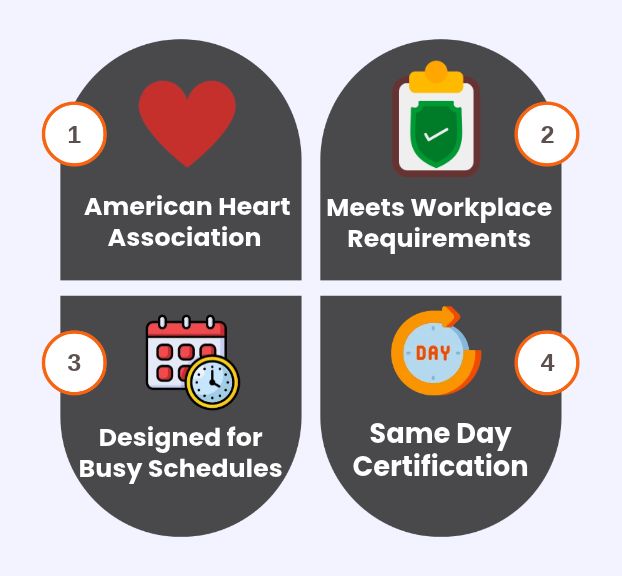
Complete an American Heart Association BLS course when AHA certification is the credential required by your employer or fitness organization. Earn a recognized certification after successfully completing the required training and skills evaluation.
Personal trainers work directly with clients during physical activity, making emergency preparedness an important part of a safe training environment. BLS training covers essential response skills for cardiac arrest, breathing emergencies, choking, and other critical situations.
Train with voice-assisted manikins that guide you through hands-on BLS practice. The technology provides prompts and feedback as you perform key skills, helping you understand your technique and make adjustments during training.
Personal trainers often work mornings, evenings, weekends, and varying shifts. Flexible scheduling provides more opportunities to complete certification around your clients and fitness commitments.
Our training setup provides a comfortable environment for learning and practicing essential BLS skills. Voice-assisted technology guides participants through the process without the need for a traditional instructor-led classroom.
Complete your BLS, ACLS, or PALS online coursework


ACLS is not a standard requirement for personal trainers. ACLS is designed for healthcare professionals and other personnel whose responsibilities require advanced cardiovascular life support. Personal trainers should complete ACLS only when a specific employer or role requires it.
PALS is not a standard requirement for personal trainers. PALS is intended for professionals responsible for responding to pediatric emergencies at an advanced life-support level. A personal trainer working with children should follow the CPR and emergency-training requirements established by the employer or facility.
The correct course depends on the requirement established by the employer or organization. Heartsaver CPR/AED courses are designed for people who need CPR and AED training but are not healthcare professionals. BLS is designed for healthcare professionals and other personnel who need to perform CPR and respond to life-threatening emergencies as part of their job.
Utah does not issue a state license specifically for personal trainers, so there is no general Utah personal-trainer licensing requirement for CPR. However, fitness facilities, employers, certification organizations, and insurance providers can establish their own CPR and First Aid requirements. Personal trainers should verify the requirements of their specific workplace before enrolling.