CPR Certification for
Fitness Trainers in Utah | CPR, AED, and First Aid
Fitness trainers and personal trainers who work directly with clients should maintain current CPR, AED, and first aid training required by their gym, fitness center, employer, or professional certification organization. CPR and AED training prepares fitness professionals to respond when a client experiences cardiac arrest, respiratory distress, or another life-threatening emergency during exercise.
For fitness trainers, an AHA Heartsaver First Aid CPR AED course is designed for people who are not healthcare professionals but have a responsibility to respond to emergencies because of their job. AHA BLS is intended for healthcare professionals and other personnel whose professional duties require healthcare-level CPR training. The appropriate course depends on the trainer’s workplace and professional requirements.
If your workplace needs BLS certification then you can get certified through our BLS courses today and take the next step toward keeping your clients safe during training sessions.
Overview of CPR, AED, and First Aid Certifications for Fitness Trainers
CPR, AED, and first aid training serve different purposes for fitness professionals. Personal trainers and fitness instructors work closely with clients during physical activity, where sudden cardiac arrest, exercise-related injuries, breathing emergencies, and other medical situations can occur.
Heartsaver CPR AED is designed for people who are not healthcare professionals but need CPR and AED training because of their workplace or responsibilities. For fitness trainers, the course covers adult CPR, AED use, and recognition of life-threatening emergencies.
Heartsaver First Aid CPR AED combines CPR and AED training with first aid skills. This course is particularly relevant to fitness professionals who supervise exercise sessions and need to respond to injuries, sudden illness, cardiac emergencies, and other common fitness-facility incidents.
BLS Provider is designed primarily for healthcare professionals and other personnel whose jobs require healthcare-level CPR. Fitness trainers should take BLS when their employer, facility, healthcare setting, or professional credential specifically requires an AHA BLS Provider course.
Fitness professionals should select the AHA course that matches their employer’s requirements, professional certification requirements, and actual responsibilities.
Who is Heartsaver CPR AED Ideal for?
- Personal trainers
- Fitness trainers
- Gym trainers
- Fitness instructors
- Group exercise instructors
- Strength and conditioning trainers
- Indoor cycling instructors
- Yoga and Pilates instructors
- Sports and conditioning coaches
- Recreation fitness instructors
Who is Heartsaver First Aid CPR AED Ideal for?
- Personal trainers who supervise clients independently
- Gym and fitness center employees
- Group fitness instructors
- Strength and conditioning coaches
- Exercise instructors
- Fitness instructors working with older adults
- Youth fitness instructors
- Recreation center fitness staff
- Private fitness trainers
- On-site corporate fitness trainers
Who is BLS Ideal for?
- Fitness trainers working in healthcare facilities
- Fitness professionals whose employer specifically requires BLS
- Exercise professionals working alongside healthcare teams
- Fitness staff employed by hospitals or medical facilities
- Trainers whose professional credential requires healthcare-level CPR
Important: Fitness trainer certification requirements in Utah may vary by employer, gym or fitness facility, professional role, and organization. Always verify which CPR, AED, first aid, BLS, and other training or credentialing courses are required by your specific employer or facility before registering.
What Special Situations Do Fitness Trainers Face That Require CPR?
Fitness trainers supervise people while they perform physical activity, sometimes at high intensity. A medical emergency can develop during a personal training session, group exercise class, strength workout, cardio session, or other fitness activity.
Common situations requiring immediate CPR, AED use, or first aid include:
A client can become unresponsive and stop breathing normally during exercise. A fitness trainer must recognize the emergency, activate the emergency response system, begin CPR, and use an AED when available.
High-intensity workouts can involve strenuous cardiovascular and resistance exercise. If a client suddenly collapses and is unresponsive or not breathing normally, the trainer must immediately transition from exercise supervision to emergency response.
Fitness professionals regularly supervise activities involving weights, machines, resistance equipment, free weights, and other exercise equipment. Falls, sprains, strains, cuts, and other injuries can require immediate first aid.
A client may experience severe breathing difficulty during exercise because of asthma, an allergic reaction, choking, or another medical emergency. Fitness trainers need to recognize when a breathing problem requires emergency medical assistance.
A client or facility visitor can experience a choking emergency before, during, or after a workout. Trainers with appropriate CPR and first aid training can provide the required emergency response.
Exercise in hot or poorly ventilated environments can contribute to heat-related illness. Fitness professionals need to recognize serious symptoms and respond appropriately while arranging emergency medical care when necessary.
What Makes CPR Certification Non-Negotiable for Fitness Trainers?
Emergencies Can Happen During Exercise
Fitness trainers supervise clients while they are physically active. A sudden medical emergency can require immediate action before EMS arrives.
Current CPR and AED training keeps critical emergency-response skills familiar and ready for use.
Fitness Trainers Are Often Immediately Beside the Client
Personal trainers typically work at close range with their clients throughout a workout. When an emergency occurs, the trainer may be among the first people available to recognize the problem and activate the facility’s emergency response.
AED Access Can Be Critical During Cardiac Arrest
Many fitness facilities maintain AEDs as part of their emergency preparedness. Trainers should know where the facility’s AED is located and understand how to use it as part of a cardiac-arrest response.
Exercise Equipment Creates Additional Injury Risks
Treadmills, free weights, resistance machines, cable systems, stationary bikes, and other equipment can be involved in falls or injuries. First aid training gives fitness professionals practical skills for responding to common injuries and sudden illness.
Employers and Certification Organizations May Require Current CPR
Gyms, fitness centers, recreation departments, personal-training employers, and professional certification organizations can establish CPR, AED, and first aid requirements for fitness professionals. Trainers should maintain the specific credential required by their workplace or professional organization.
On-Site CPR, AED & First Aid Training for Fitness Teams
Fitness facilities often need to train multiple personal trainers, group exercise instructors, managers, and other staff without disrupting normal operations.
Utah CPR Classes provides on-site CPR, AED, and first aid training for eligible fitness organizations and groups. Bringing training to the facility can make it easier to coordinate certification around trainer schedules, class times, facility operations, and staff availability.
On-site training may be useful for:
- Fitness centers
- Gyms
- Health clubs
- Recreation centers
- Recreation centers
Why Choose Utah CPR Classes for Training?
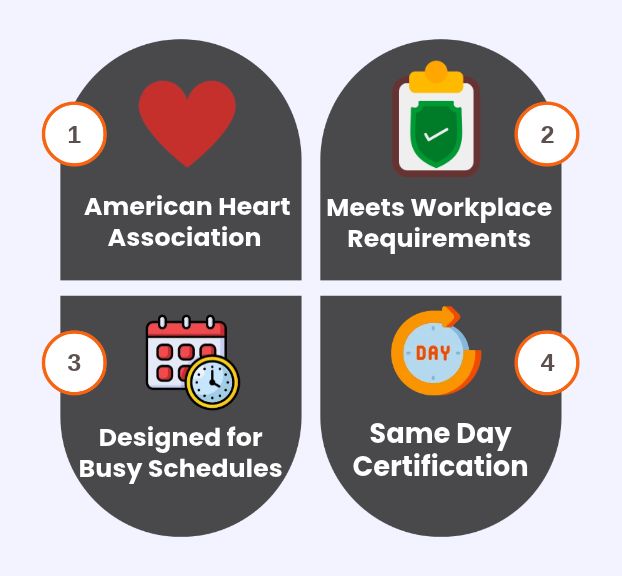
Official AHA Certification
Complete the applicable course requirements and receive the corresponding American Heart Association course completion card.
Training for Fitness Professionals
CPR, AED, and first aid training helps fitness professionals prepare for emergencies that may occur while training clients, supervising workouts, or leading exercise classes.
Quality Training Equipment
Gain practical experience with CPR manikins, AED training equipment, and other appropriate tools used for hands-on skills practice.
Short On-Site Time
For eligible blended-learning courses, completing the online coursework in advance can help minimize the time required at the training location.
Trusted by Professionals and Organizations
CPR, AED, and first aid training can support the credentialing needs of fitness trainers, personal trainers, gyms, recreation facilities, wellness organizations, and other workplaces.
3 Steps to Get Certified with Us
Complete your BLS, ACLS, or PALS online coursework
Attend short hands-on skills session
Receive your AHA certification promptly
Hear From Our Certified Students


Book Your Course Today!!
Get the BLS certification required for your fitness career through Utah CPR Classes. Complete your training today and stay ready to provide immediate assistance during cardiac arrest, breathing emergencies, and other unexpected medical situations in a fitness setting.
Frequently Asked Questions
Does AHA BLS Certification Cover First Aid?
No. AHA BLS focuses on basic life support, including CPR, AED use, and ventilation. First aid training addresses the recognition and initial care of injuries, sudden illness, and other non-cardiac emergencies.
Which AHA Course Should a Personal Trainer Take for a New Job?
The trainer should take the AHA course specified by the gym, fitness center, employer, or professional certification organization. Common options include Heartsaver CPR AED, Heartsaver First Aid CPR AED, and BLS Provider.
Can a Fitness Trainer Renew CPR Certification Before It Expires?
Yes. Fitness trainers can complete renewal training before their current certification expires. Renewing before expiration helps prevent a gap in certification when a current credential is required.
Can a Fitness Trainer Use the Same AHA Certification at a Different Gym?
A current AHA course completion card can be presented to another employer, but the new gym or fitness organization determines whether that specific credential satisfies its certification requirements. Trainers should confirm the required course with the new employer.