Dental assistants in Utah need current CPR or BLS certification to work in a dental office. For dental assistants seeking an American Heart Association credential, the AHA BLS Provider Course provides healthcare-level CPR training covering high-quality CPR, AED use, ventilation, and airway obstruction response. Utah’s dental-assistant rule specifically requires current CPR or BLS certification and does not establish ACLS or PALS as general certification requirements for dental assistants.
Dental assistants work directly with patients throughout examinations, restorative procedures, extractions, radiographs, orthodontic appointments, oral surgery, and other dental procedures. Because they are often positioned chairside, dental assistants need to recognize a sudden change in a patient’s condition and respond quickly while assisting the dentist and activating the practice’s emergency procedures.
Keeping your CPR or BLS certification current helps you maintain the credential required for your dental-assisting role while staying prepared to respond when a medical emergency occurs in the dental office.
BLS is the primary AHA life support course relevant to dental assistants who need professional-level CPR training. The AHA BLS Provider Course is designed for healthcare professionals and trained first responders who provide patient care. It covers recognition of life-threatening emergencies, high-quality CPR, AED use, ventilation, and relief of foreign-body airway obstruction.
For dental assistants, these skills are relevant to emergencies that can develop while a patient is receiving treatment or recovering in the dental office.
BLS training includes:
Utah dental assistants should maintain the current CPR or BLS credential required by Utah’s dental practice rules and their employer. Current Utah administrative rules state that a dental assistant may not work without current CPR or BLS certification.
Important: Dental assisting requirements in Utah vary based on the type of dental assisting duties performed and the credentials or certifications required by the employer and Utah regulatory authorities. Always verify the current education, certification, training, and credentialing requirements with the specific dental practice and the Utah Division of Professional Licensing (DOPL) before registering for a dental assisting program or course.
BLS training provides practical skills that apply to the dental team’s initial response to life-threatening emergencies.
Dental assistants learn the fundamentals of effective chest compressions and coordinated CPR during cardiac arrest.
BLS training teaches early AED use as part of the response to cardiac arrest. Dental assistants who are assigned to retrieve or prepare the AED need to understand how the device fits into the resuscitation sequence.
BLS includes ventilation skills used during resuscitation and teaches how ventilation fits into effective CPR.
Dental assistants work around the patient’s mouth and airway during dental treatment. BLS training includes recognition and response to foreign-body airway obstruction.
Dental office emergencies often involve multiple members of the team. BLS training includes team-based resuscitation skills that help healthcare providers coordinate their response.
Dental practices serve patients across different age groups. BLS training covers basic life support for adults, children, and infants.
A patient can suddenly become unresponsive and stop breathing normally while seated in the dental chair.
The dental assistant needs to recognize the emergency, alert the dentist, activate the office response, retrieve the AED, and participate in CPR when directed and trained to do so.
Dental procedures take place around the patient’s mouth and airway. A patient can experience a foreign-body airway obstruction during or around treatment.
BLS training includes recognition and response to foreign-body airway obstruction, giving dental assistants a specific skill relevant to chairside emergencies.
Patients can faint during dental treatment because of anxiety, pain, blood, positioning, or other medical factors.
A dental assistant may be the first team member to notice that the patient is becoming unresponsive. Quick communication with the dentist allows the practice’s emergency procedure to begin.
A patient may develop difficulty breathing during treatment because of airway obstruction, an underlying medical condition, or another acute problem.
The dental assistant needs to recognize abnormal breathing and communicate the patient’s condition immediately while the dentist evaluates and manages the emergency.
Some dental practices provide procedures involving sedation or nitrous oxide. Dental assistants working in these environments may have responsibilities related to patient observation, equipment preparation, documentation, and emergency support.
Dental practices often have several assistants and other patient-care staff who need current CPR or BLS certification.
On-site AHA BLS training gives dental practices an option to train multiple eligible employees together while coordinating the course around office hours and patient appointments.
On-site training is suitable for:
Dental assistants work directly with patients in clinical environments where unexpected emergencies can occur. CPR training helps dental assistants prepare to respond to cardiac arrest, breathing emergencies, choking, AED use, and other time-sensitive situations.
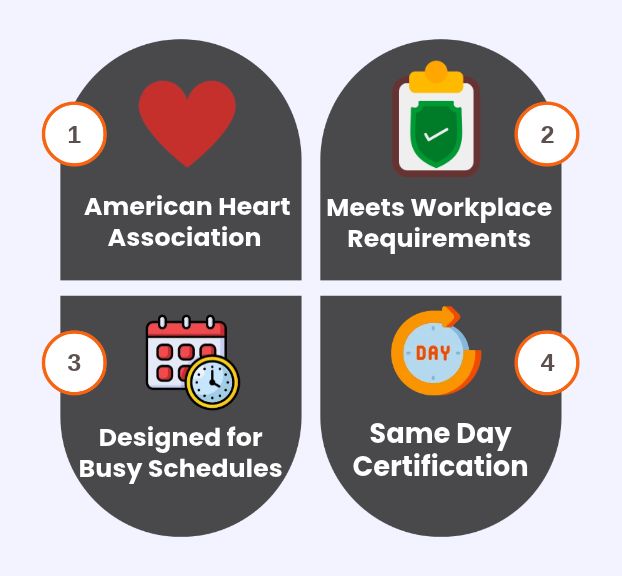
Our training approach combines structured course content, hands-on practice, and feedback from voice-assisted training equipment to help participants prepare for their required skills evaluation.
Our VAM technology provides guidance and performance feedback throughout hands-on practice, allowing participants to work through the required skills without relying on traditional instructor-led classroom instruction.
Efficient course scheduling and focused instruction can help eligible participants complete their required training and receive their course completion documentation promptly after meeting all course requirements.
Utah CPR Classes offers training options at convenient Utah locations, making it easier for dental assistants to find a course that fits their workplace, school, commute, and schedule.
Complete your BLS, ACLS, or PALS online coursework


Keep your CPR or BLS certification current and stay prepared to respond when a medical emergency occurs in your dental office.
Whether you work in general dentistry, pediatric dentistry, orthodontics, oral surgery, or another dental setting, current CPR or BLS certification is required for dental assistants under Utah’s administrative rules.
Enroll in an American Heart Association BLS Provider course today and maintain the life support credential required for your dental-assisting role.
Yes. AHA BLS training includes basic life support skills for adults, children, and infants.
Yes. Dental practices can arrange group BLS training for multiple eligible dental assistants and other staff members. Group training also provides an opportunity for the practice to coordinate emergency-response responsibilities across the dental team.
An AHA BLS Course Completion eCard is valid for two years. Dental assistants should renew before their current credential expires so they continue to meet applicable workplace and Utah requirements.
Yes. The AHA BLS Provider Course is designed for healthcare professionals and trained first responders who provide patient care. Heartsaver courses are designed for people who need CPR, AED, and/or first aid training but are not necessarily healthcare professionals.