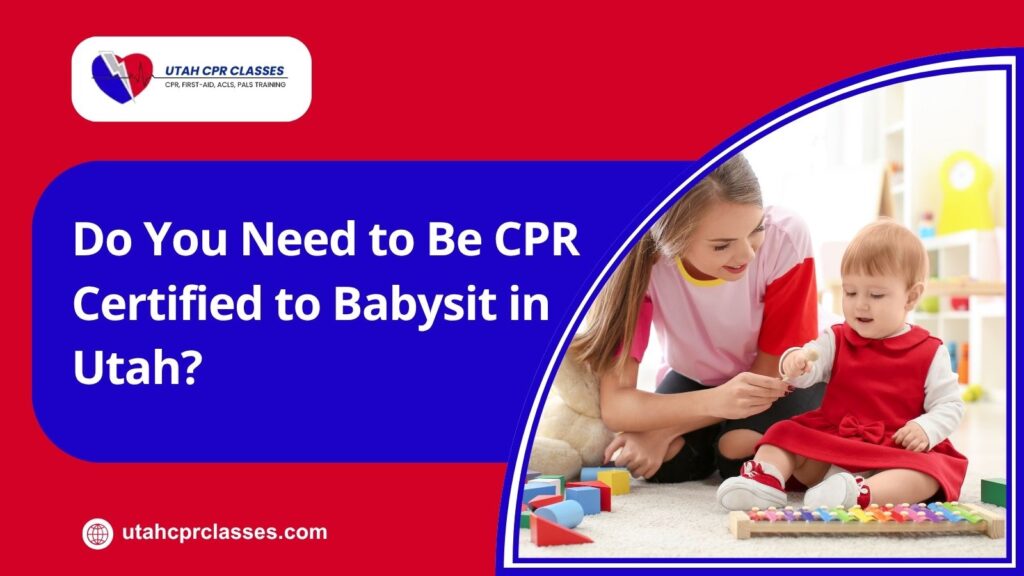
If you’re planning to babysit in Utah, one of the first questions you may have is, “Do you need to be CPR certified to babysit in Utah?” The answer is no. Private babysitters in Utah are not legally required to have CPR certification. However, completing CPR and First Aid training is highly recommended because it provides essential emergency response skills, helps you handle unexpected situations, and shows parents that you are committed to child safety.
Babysitting involves more than supervising children and keeping them entertained. Caregivers may need to respond to emergencies such as choking, breathing problems, allergic reactions, falls, or other injuries. Having CPR certification can help babysitters stay calm, make quick decisions, and provide appropriate care until emergency responders arrive. For babysitters across Utah, including Salt Lake City, Provo, Ogden, Logan, St. George, Orem, Sandy, and surrounding communities, CPR training can also improve credibility and increase childcare opportunities.
This guide explains Utah babysitting requirements, the importance of CPR certification, recommended training options, and how CPR skills can help you become a more prepared and trusted caregiver.
When Is CPR Certification Required in Utah?
Although private babysitters are not legally required to be CPR certified in Utah, there are situations where CPR training may be required or strongly preferred. The requirements often depend on the type of childcare role and the employer’s policies rather than Utah law itself. For example, individuals working in licensed childcare centers, preschools, daycare facilities, or after-school programs may be required to maintain current CPR and First Aid certification to meet workplace or licensing requirements.
Similarly, some families hiring a full-time nanny or in-home caregiver prefer candidates who already have CPR certification because it provides additional reassurance that they can respond appropriately during an emergency. Even if CPR certification isn’t mandatory for your babysitting role, earning a nationally recognized certification can be a valuable advantage. It demonstrates your commitment to child safety, helps build trust with parents, and prepares you to act confidently if a child experiences a choking incident, breathing emergency, or sudden cardiac arrest.
Why CPR Certification Is Important for Babysitters
Although CPR certification is not legally required for private babysitters in Utah, it can make a life-saving difference during an emergency. Babysitters are often the only responsible adult present, so being able to recognize a medical emergency and respond quickly is an essential skill.
Below are some of the reasons CPR certification is important for babysitters:
Be Prepared for Unexpected Emergencies
Children can experience emergencies with little or no warning. CPR training prepares babysitters to respond to situations such as:
- Choking on food or small objects
- Breathing emergencies
- Sudden cardiac arrest
- Drowning incidents
- Severe allergic reactions
- Seizures
- Loss of consciousness
Knowing what to do during these critical moments can help protect a child’s life until emergency medical services arrive.
Learn Essential Lifesaving Skills
A comprehensive CPR course teaches babysitters how to:
- Perform CPR on infants, children, and adults
- Relieve choking in infants, children, and adults
- Recognize the signs of a cardiac or breathing emergency
- Use an Automated External Defibrillator (AED)
- Provide care until first responders arrive
These practical skills can help you stay calm and act with confidence when every second counts.
Build Trust with Parents
Many Utah parents prefer hiring babysitters who are CPR certified because it demonstrates that they:
- Prioritize child safety
- Are prepared to handle emergencies
- Have completed recognized lifesaving training
- Can respond confidently under pressure
For parents, knowing their babysitter is CPR certified provides added peace of mind while they are away.
Improve Your Babysitting Opportunities
CPR certification can also strengthen your qualifications and help you stand out when applying for babysitting or childcare positions. It is a valuable credential for:
- Babysitters
- Nannies
- Daycare assistants
- Preschool staff
- Summer camp counselors
- After-school caregivers
A Skill You’ll Carry for Life
CPR certification is more than a qualification for babysitting—it’s a lifelong skill that can help you protect family members, friends, coworkers, or even strangers during an emergency. Investing a few hours in CPR training can prepare you to make a meaningful difference when every second matters.
What Type of CPR Certification Should Babysitters Get?
When choosing a CPR course, babysitters should look for training that prepares them to respond to emergencies involving infants, children, and adults. Since babysitters may care for children of different ages, a comprehensive CPR course provides the knowledge and practical skills needed to handle a variety of emergency situations.
Here are the types of CPR certification that babysitters can get:
Choose a Course that Covers Essential Topics
A quality CPR certification course should include training in:
- Infant CPR
- Child CPR
- Adult CPR
- Choking relief for infants, children, and adults
- AED (Automated External Defibrillator) basics
- Recognizing life-threatening emergencies
- How to call 911 and provide care until emergency responders arrive
These skills help babysitters respond confidently when every second matters.
Choose a Nationally Recognized CPR Certification
For babysitters seeking a certification that is widely accepted and respected, an American Heart Association (AHA) Heartsaver® CPR AED course is an excellent choice. This course is designed for individuals who are not healthcare professionals but want to learn lifesaving CPR and AED skills.
Many babysitters also choose to complete Heartsaver First Aid training alongside CPR certification. First Aid training teaches how to respond to common injuries and illnesses such as cuts, burns, sprains, allergic reactions, and bleeding, making it a valuable addition for anyone caring for children.
Select Course with Hands-On Training
When selecting a CPR course, choose one that includes a hands-on skills practice session. Practicing CPR techniques on training manikins helps build muscle memory and confidence, ensuring you’re better prepared to respond during a real emergency.
Consider Employer or Family Requirements
If you’re babysitting professionally or applying for positions with daycare centers, nanny agencies, or childcare organizations, ask whether they require a specific CPR certification. While many families simply prefer a nationally recognized certification, some employers may have their own training requirements.
Who Should Consider CPR Certification?
CPR certification is valuable for anyone responsible for the safety and well-being of children. While private babysitters in Utah are not legally required to be CPR certified, completing CPR and First Aid training can help caregivers respond effectively during emergencies and give parents greater confidence in their childcare abilities.
Here are some childcare-related roles that should consider getting CPR certified:
Babysitters
Whether you babysit occasionally for neighbors or regularly for multiple families, CPR certification prepares you to handle emergencies such as choking, breathing difficulties, and sudden cardiac arrest.
Nannies
Full-time and part-time nannies often care for children without another adult present. Many families prefer, or even require, nannies to have a current CPR certification before hiring them.
Daycare and Preschool Staff
Employees at licensed childcare centers and preschools may be required by their employer or licensing standards to maintain CPR certification. Having current training helps create a safer environment for children in group care settings.
Teen Babysitters
Teenagers who want to start babysitting can benefit greatly from CPR training. Becoming CPR certified not only teaches essential lifesaving skills but also helps young babysitters stand out to parents looking for responsible and well-prepared caregivers.
Parents and Grandparents
Parents, grandparents, and other family members who frequently care for infants and young children can also benefit from CPR certification. Knowing how to respond during an emergency can make a critical difference before emergency medical services arrive.
Camp Counselors and Youth Volunteers
Individuals who supervise children during summer camps, church programs, sports activities, or community events should also consider CPR certification. These roles often involve caring for groups of children where quick emergency response is essential.
Are There Age Requirements for Babysitters in Utah?
No. Utah does not have a statewide law that sets a minimum age for babysitters. Instead, parents and guardians are responsible for deciding whether a babysitter is mature, responsible, and capable of providing safe and appropriate care for their children.
Although Utah law does not specify a minimum babysitting age, many families choose babysitters who are between 12 and 16 years old. The appropriate age often depends on the babysitter’s maturity, experience, and the ages and needs of the children being cared for. Younger babysitters may begin by watching younger siblings or assisting another caregiver before taking on independent babysitting responsibilities.
When selecting a babysitter, parents often consider factors such as:
- Age and maturity
- Previous babysitting or childcare experience
- Ability to follow instructions
- Good communication skills
- Reliability and responsibility
- CPR and First Aid certification
- Confidence in handling emergencies
These qualities often have a greater impact on a parent’s decision than age alone.
What Other Skills Should Utah Babysitters Have?
CPR certification is an important qualification, but being a great babysitter requires more than knowing how to respond during emergencies. Parents in Utah want someone who is dependable, patient, and capable of providing a safe, positive environment for their children.
Developing the following skills can help you become a more trusted and confident babysitter.
First Aid Knowledge
Minor injuries such as cuts, scrapes, burns, nosebleeds, and bumps are common when caring for children. Basic First Aid training helps babysitters manage these situations safely while knowing when professional medical care is needed.
Strong Communication Skills
Good communication is essential when working with both children and parents. Babysitters should be able to:
- Understand and follow parents’ instructions
- Communicate clearly with children
- Share updates about the child’s activities or any concerns
- Remain calm and provide accurate information during an emergency
Responsibility and Reliability
Parents expect babysitters to be dependable and attentive. A responsible babysitter should:
- Arrive on time
- Follow household rules
- Supervise children at all times
- Keep emergency contact information readily available
- Make safety a top priority
Problem-Solving and Decision-Making
Children can become sick, injured, or upset unexpectedly. Babysitters should be able to assess the situation, stay calm under pressure, and make sound decisions until a parent or emergency responder takes over.
Patience and Positive Childcare Skills
Every child has a unique personality and routine. Patient babysitters are better equipped to manage challenging behaviors, resolve conflicts, and create a fun, supportive environment where children feel comfortable and secure.
Basic Child Safety Awareness
A good babysitter should understand everyday safety practices, including:
- Preventing choking hazards
- Keeping medications and cleaning supplies out of reach
- Supervising children around water
- Practicing safe food preparation
- Following safe sleep guidelines for infants
- Knowing the family’s emergency evacuation plan
Confidence in Emergency Response
Emergencies can happen without warning. Babysitters who are trained in CPR and First Aid are often better prepared to recognize serious medical situations, call 911 promptly, and provide appropriate care until emergency medical services arrive.
How Can Babysitters Get CPR Certified?
Getting CPR certified is a straightforward process that equips babysitters with the knowledge and practical skills needed to respond to medical emergencies involving infants, children, and adults.
To get CPR certified, babysitters can follow these steps:
Step 1: Choose a Nationally Recognized CPR Course
Start by enrolling in a CPR course offered by a reputable training provider. For babysitters, a course that includes infant, child, and adult CPR, choking relief, and AED (Automated External Defibrillator) training provides the most comprehensive preparation.
Step 2: Complete the CPR Training
During the course, you’ll learn how to:
- Recognize life-threatening emergencies
- Perform CPR on infants, children, and adults
- Help a choking victim
- Use an AED safely
- Respond until emergency medical services arrive
Many courses also include First Aid training, which teaches you how to manage common injuries such as cuts, burns, bleeding, and allergic reactions.
Step 3: Practice Your Skills
Quality CPR courses include a hands-on skills session where participants practice CPR and choking relief techniques using training manikins. This practical experience helps build confidence and prepares you to respond effectively during real emergencies.
Step 4: Receive Your CPR Certification
After successfully completing the course requirements, you’ll receive a CPR certification card. Most certifications remain valid for two years, after which you’ll need to complete a renewal course to keep your certification current.
Does CPR Certification Expire?
Yes, CPR certification does expire. Most CPR certifications are valid for about two years from the date of completion, although the exact expiration period may vary depending on the training provider.
Babysitters should renew their CPR certification before it expires to keep their emergency response skills current and ensure they are prepared to handle situations involving infants, children, and adults.
Become a More Confident Babysitter with CPR Training
So, do you need to be CPR certified to babysit in Utah? No, private babysitters are not legally required to have CPR certification in Utah, but earning CPR and First Aid certification is highly recommended. It helps babysitters develop essential emergency response skills, builds trust with parents, and demonstrates a commitment to child safety. Whether you are babysitting in Salt Lake City, Provo, Ogden, St. George, Orem, Sandy, or other Utah communities, CPR certification can strengthen your qualifications and help you provide safer, more confident care.
If you want to become CPR certified in Utah, Utah CPR Classes provides American Heart Association-aligned courses that focus on real-world emergency response skills and hands-on practice. Their training options are designed to fit different schedules while helping participants gain the confidence needed to handle critical situations involving infants, children, and adults. Completing a CPR course can be a valuable investment in your babysitting career and provide you with skills that can help protect lives when emergencies happen.