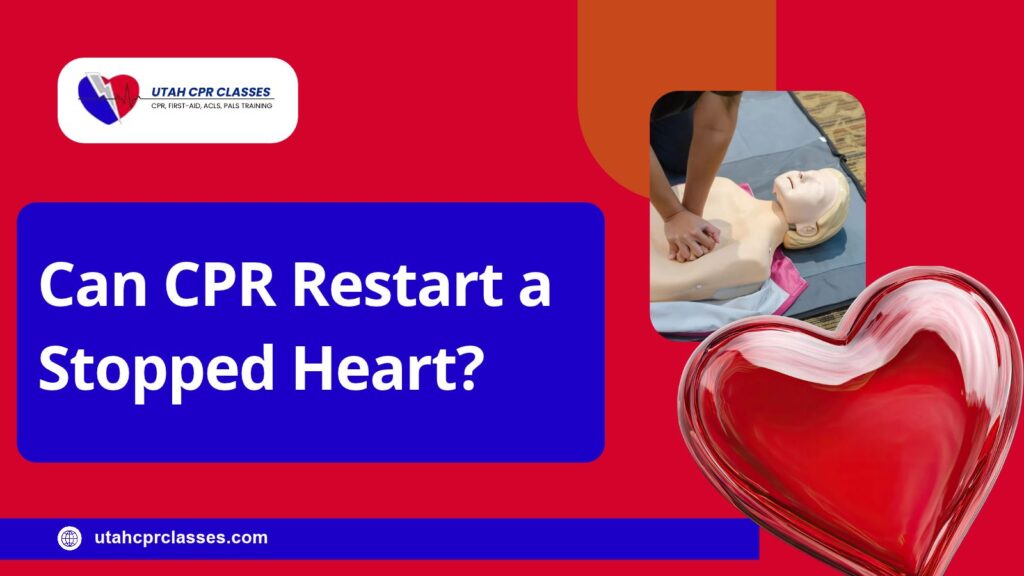
Cardiopulmonary Resuscitation (CPR) does not usually restart a stopped heart on its own. Instead, it helps maintain blood circulation and deliver oxygen to the brain and other vital organs when the heart is no longer able to pump blood effectively. In this way, CPR buys valuable time until advanced medical intervention can be provided. Early CPR can double or even triple a victim’s chances of survival and significantly increase the likelihood of achieving a return of spontaneous circulation (ROSC).
During cardiac arrest, the heart’s electrical system malfunctions, preventing it from pumping blood effectively. An automated external defibrillator (AED) can deliver an electrical shock to treat certain life-threatening heart rhythms, such as ventricular fibrillation (VF) and pulseless ventricular tachycardia (pVT). CPR and early defibrillation work together to improve the chances of survival by maintaining circulation and helping restore an effective heartbeat.
Understanding what CPR can and cannot do is essential when responding to cardiac arrest. This guide explores how CPR supports the heart, what interventions can restore an effective heartbeat, how to perform CPR correctly, and whether survival from cardiac arrest is possible with CPR alone.
What Happens to the Heart During Cardiac Arrest?
During cardiac arrest, the heart suddenly stops pumping blood effectively throughout the body. This usually happens when an electrical malfunction disrupts the heart’s normal rhythm, preventing it from contracting properly and maintaining blood circulation. As a result, oxygen-rich blood stops reaching the brain and other vital organs.
Under normal conditions, electrical signals coordinate the heart’s contractions, allowing it to pump blood continuously. However, during cardiac arrest, these signals become disrupted or stop, resulting in abnormal heart rhythms such as:
- Ventricular fibrillation (VF): The heart’s lower chambers quiver chaotically instead of contracting effectively.
- Pulseless ventricular tachycardia (pVT): The ventricles beat extremely fast but fail to pump blood effectively.
- Asystole: The heart has no detectable electrical activity, commonly described as a flatline.
- Pulseless electrical activity (PEA): Electrical activity is present, but the heart does not produce an effective heartbeat or pulse.
How Does CPR Help When the Heart Stops Beating?
CPR helps when the heart stops beating effectively by manually creating blood flow through the chest. Chest compressions temporarily perform some of the heart’s pumping function, pushing blood toward the brain, heart muscle, and other vital organs.
Although CPR does not normally restore the heart’s natural rhythm, it helps preserve organ function while emergency treatment is being provided. Here is how CPR supports the body during cardiac arrest:
1. Maintains Blood Circulation
During chest compressions, pressure applied to the chest helps move blood through the circulatory system. This creates artificial circulation when the heart cannot pump effectively on its own.
2. Delivers Oxygen to the Brain
The brain needs a continuous supply of oxygenated blood to function. CPR helps maintain some blood flow to the brain, reducing the risk of severe neurological injury while waiting for advanced medical care.
3. Supplies Oxygen to the Heart Muscle
The heart muscle also needs oxygen to recover and respond to treatment. Chest compressions help circulate oxygenated blood through the coronary arteries, supporting the heart during cardiac arrest.
4. Improves the Effectiveness of Defibrillation
High-quality CPR helps maintain blood flow to the heart muscle, which is important when treating shockable rhythms such as VF and pVT. This supports the heart’s ability to respond to defibrillation.
5. Buys Time Until Advanced Medical Treatment
CPR provides temporary circulatory support until an AED, emergency medical personnel, or advanced life support treatment becomes available. It does not replace defibrillation or other necessary cardiac arrest treatments.
What Actually Restarts the Heart During Cardiac Arrest?
Defibrillation can restore an effective heart rhythm during certain types of cardiac arrest, particularly ventricular fibrillation (VF) and pulseless ventricular tachycardia (pVT). A defibrillator delivers a controlled electrical shock to stop the abnormal electrical activity, allowing the heart’s natural pacemaker to potentially reestablish an organized rhythm.
However, defibrillation is not effective for every type of cardiac arrest. The treatment depends on the heart’s electrical rhythm and the underlying cause. CPR, defibrillation when indicated, medications, and treatment of reversible causes all play important roles in cardiac arrest resuscitation.
There are two major categories of cardiac arrest rhythms:
1. Shockable rhythms
- Ventricular fibrillation (VF): The heart’s lower chambers produce chaotic electrical activity and cannot pump blood effectively.
- Pulseless ventricular tachycardia (pVT): The lower chambers beat extremely fast, preventing effective blood circulation.
An AED can recommend an electrical shock for these rhythms.
2. Non-shockable rhythms
- Asystole: Electrical activity is absent or nearly absent, commonly described as a flatline.
- Pulseless electrical activity (PEA): Electrical activity is present, but the heart does not produce an effective pulse or circulation.
An AED does not deliver a shock for these rhythms. CPR and advanced medical treatment are necessary while healthcare professionals identify and treat the underlying cause.
Why Can’t CPR Restart a Stopped Heart?
CPR cannot reliably restart a stopped heart because chest compressions do not directly correct the electrical problems responsible for most cardiac arrests. Instead, they create artificial blood circulation to support vital organs while emergency responders work to restore the heart’s function.
The heart relies on coordinated electrical signals to contract and pump blood. During cardiac arrest, these signals can become chaotic or disappear. Although CPR applies pressure to the chest and moves blood through the body, it does not necessarily correct the underlying electrical disturbance.
There are several reasons CPR alone cannot reliably restore a normal heartbeat:
- It does not correct chaotic electrical activity: In ventricular fibrillation, the heart’s electrical signals become disorganized. Chest compressions cannot reliably eliminate this abnormal rhythm.
- It does not replace defibrillation: Shockable rhythms generally require an electrical shock to restore an organized rhythm. CPR supports circulation while an AED or defibrillator is obtained and used.
- It provides limited blood circulation: Chest compressions generate only a portion of the blood flow produced by a normally functioning heart. They help preserve oxygen delivery but cannot fully replace normal cardiac pumping.
- It does not treat every underlying cause: Cardiac arrest can result from oxygen deprivation, severe blood loss, electrolyte imbalances, blood clots, and other medical problems. These conditions require appropriate treatment.
However, this does not mean CPR is ineffective. Immediate, high-quality CPR is one of the most important interventions during cardiac arrest. It helps maintain blood flow and increases the likelihood that subsequent emergency treatments will successfully restore circulation.
What Is the Difference Between CPR and Defibrillation?
CPR (cardiopulmonary resuscitation) and defibrillation are two different emergency treatments used during cardiac arrest. CPR maintains blood circulation through chest compressions, while defibrillation uses an electrical shock to treat certain abnormal heart rhythms and potentially restore an effective heartbeat. Both are important parts of cardiac arrest resuscitation, but they serve different purposes.
During cardiac arrest, the heart cannot pump blood effectively, depriving the brain and other vital organs of oxygen. CPR temporarily supports circulation, while defibrillation can correct specific electrical disturbances responsible for cardiac arrest. Using both treatments promptly, when indicated, improves the chances of successful resuscitation.
Key Differences Between CPR and Defibrillation
| Feature | CPR | Defibrillation |
| Full form | Cardiopulmonary resuscitation | Electrical shock treatment using a defibrillator |
| Primary purpose | Maintains blood circulation and oxygen delivery | Treats shockable abnormal heart rhythms |
| How it works | Uses chest compressions and rescue breaths when appropriate | Delivers a controlled electrical shock through the chest |
| Effect on the heart | Helps circulate blood when the heart cannot pump effectively | Stops certain abnormal electrical rhythms, allowing an organized rhythm to potentially return |
| Equipment | Hands and, when appropriate, a barrier device or ventilation equipment | Automated external defibrillator (AED) or manual defibrillator |
| Who can perform it? | Trained rescuers and bystanders following emergency guidance | Bystanders can use public-access AEDs; healthcare professionals use manual defibrillators |
| When it is used | During suspected cardiac arrest | During cardiac arrest involving a shockable rhythm |
| Can it restart the heart? | Does not reliably restart the heart by itself | Can restore an organized rhythm in ventricular fibrillation and pulseless ventricular tachycardia |
How to Perform CPR When Someone’s Heart Stops
If someone suddenly collapses, becomes unresponsive, and is not breathing normally or is only gasping, assume cardiac arrest and begin CPR immediately.
Follow these steps to perform CPR on an adult:
- Check Scene Safety: Make sure the surrounding area is safe for you, the victim, and other bystanders before approaching.
- Check Responsiveness: Tap the person’s shoulders and shout to see if they respond.
- Call Emergency Services: Ask someone to call emergency services and bring an automated external defibrillator (AED).
- Start Chest Compressions: Place both hands in the center of the chest, on the lower half of the breastbone.
- Perform Compressions: Push hard and fast at 100–120 compressions per minute, with a depth of at least 2 inches (5 cm) but not more than 2.4 inches (6 cm).
- Give Rescue Breaths: If trained, perform 30 compressions followed by 2 rescue breaths. Otherwise, provide continuous hands-only CPR.
- Use an AED: Turn it on, attach the pads, and follow its voice instructions. Resume CPR immediately after a shock or a no-shock message.
Continue CPR until the person shows signs of life and breathes normally, emergency professionals take over, or you cannot continue.
Does CPR Work if Someone Has a Heart Attack?
Yes, CPR can help save someone who has a heart attack if the condition causes cardiac arrest. However, CPR is not normally needed when someone is having a heart attack but remains conscious, and their heart is still pumping blood. The appropriate response depends on whether the person is experiencing a heart attack alone or has progressed to cardiac arrest.
A heart attack occurs when blood flow to part of the heart muscle becomes blocked, usually because of a blood clot in a coronary artery. This deprives the affected heart muscle of oxygen and can cause permanent damage. Although the heart usually continues beating during a heart attack, the condition can trigger dangerous electrical disturbances that lead to cardiac arrest.
Cardiac arrest is different because the heart suddenly loses its ability to pump blood effectively. When this happens, the person becomes unresponsive and stops breathing normally or only gasps. Immediate CPR and AED use become essential.
Learn CPR and Be Prepared to Respond to Cardiac Arrest
CPR cannot usually restart a stopped heart by itself, but it plays a critical role in maintaining blood circulation and oxygen delivery during cardiac arrest. When combined with early defibrillation, appropriate medical treatment, and a prompt emergency response, CPR can significantly improve the chances of survival. Understanding the difference between CPR and defibrillation, recognizing cardiac arrest, and knowing how to perform high-quality chest compressions can help you respond effectively in an emergency.
Strengthen Your Lifesaving Skills With Utah CPR Classes. Enroll in an AHA BLS certification course in Utah to learn how to recognize cardiac arrest, perform high-quality CPR, provide rescue breaths, and use an AED confidently. Utah CPR Classes offers a convenient blended learning format with self-paced online training and a short, hands-on skills session, making it easier to fit certification into your schedule. We also provide AHA ACLS and PALS courses for healthcare professionals who want to develop advanced skills in managing cardiovascular emergencies and responding to pediatric life-threatening conditions. Visit Utah CPR Classes to explore available courses and get started.