Police officers in Utah need current American Heart Association BLS certification for their emergency-response responsibilities. BLS training prepares police officers to recognize cardiac arrest, perform high-quality CPR, use an AED, provide effective ventilation, respond to choking, and work as part of a coordinated resuscitation team.
Police officers may be among the first emergency responders to reach a person experiencing cardiac arrest, respiratory arrest, overdose, traumatic injury, or another life-threatening emergency. BLS training gives officers the resuscitation skills needed to begin immediate care while waiting for additional medical personnel.
If you need BLS certification or renewal, you can complete an American Heart Association BLS course through Utah CPR Classes and maintain the life support credential required for your law enforcement role.
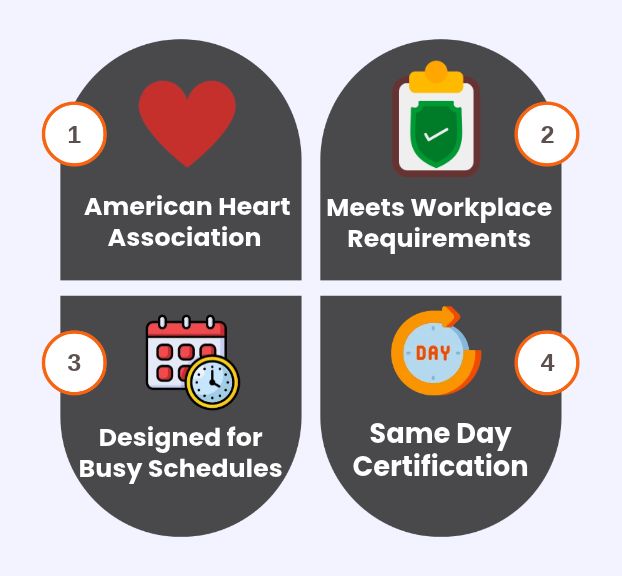
BLS provides police officers with essential resuscitation skills for responding to life-threatening emergencies before advanced medical care arrives.
The American Heart Association BLS course covers high-quality CPR, AED use, ventilation, choking response, recognition of cardiac arrest, and effective team dynamics during resuscitation.
For police officers, these skills are particularly relevant because law enforcement personnel frequently respond to emergencies outside hospitals and other controlled medical environments. Officers may encounter a collapsed person in a residence, roadway, business, school, public facility, or other location.
BLS training also emphasizes coordinated resuscitation, allowing officers to work effectively with other trained responders during an emergency.
Important: Police officer certification and training requirements vary by police department, jurisdiction, rank, specialty, and employer. Always verify which training, certification, licensing, and credentialing courses are required by the specific police department or law-enforcement agency before registering.
Police officers can encounter medical emergencies during routine patrol, emergency calls, traffic incidents, welfare checks, arrests, public events, and other law enforcement activities.
Common situations requiring immediate BLS skills include:
Police officers may arrive at a residence, business, roadway, or public location before EMS. When a person is unresponsive and not breathing normally, officers trained in BLS can recognize cardiac arrest, begin CPR, and use an AED while waiting for additional medical personnel.
Police officers may encounter unresponsive individuals during overdose calls, welfare checks, arrests, or other law enforcement situations. BLS training prepares officers to recognize life-threatening breathing problems and cardiac arrest and begin appropriate resuscitation while emergency medical assistance is provided.
A person may experience cardiac arrest, respiratory arrest, or another serious medical emergency during or after an arrest. Officers need to recognize sudden deterioration and begin appropriate BLS procedures while requesting EMS.
Following a physical confrontation or use-of-force incident, an individual can experience a serious medical emergency. BLS training gives officers the skills to recognize cardiac arrest and initiate resuscitation when required.
Police officers frequently respond to vehicle crashes and roadside emergencies. A crash victim can experience cardiac arrest or another life-threatening condition before EMS reaches the scene. Officers with current BLS training are prepared to begin appropriate resuscitation procedures.
Welfare checks can involve individuals experiencing cardiac arrest, respiratory emergencies, overdose, or other serious medical conditions. Officers may be the first trained responders to reach the person.
Police officers are frequently dispatched to emergency calls and can reach a patient before an ambulance. Current BLS training prepares officers to begin resuscitation while EMS is responding.
Cardiac arrest requires immediate recognition and intervention. BLS training reinforces the skills officers need to begin CPR, use an AED, and provide appropriate resuscitation until additional medical care arrives.
Officers cannot know whether a routine patrol call, welfare check, traffic incident, or disturbance will involve a medical emergency. Current BLS training keeps essential resuscitation skills ready for unexpected situations.
Police officers respond in homes, vehicles, streets, businesses, schools, parks, and other environments. BLS training prepares officers to provide immediate lifesaving assistance in these settings.
Police and EMS frequently respond to the same incidents. BLS training gives officers a foundation for beginning resuscitation and coordinating with arriving EMS personnel.
Police departments often need to train multiple officers while maintaining patrol coverage and normal public safety operations.
Utah CPR Classes provides on-site BLS training for eligible law enforcement organizations and groups. Bringing BLS training to the department can make it easier to coordinate certification around patrol schedules, shift changes, training days, and operational responsibilities.
On-site BLS training can be useful for:
Utah CPR Classes provides American Heart Association BLS training for eligible healthcare and emergency professionals. Police officers who successfully complete the applicable course requirements receive the corresponding AHA BLS course completion card.
BLS training addresses resuscitation skills relevant to police officers who may encounter cardiac arrest, respiratory emergencies, overdose-related emergencies, drowning, choking, trauma, and sudden medical deterioration.
Police officers frequently work rotating shifts, nights, weekends, holidays, and overtime. Available blended-learning options allow participants to complete the online portion before completing the required hands-on skills training.
BLS requires practical performance of essential resuscitation skills. Hands-on training allows officers to practice CPR, AED use, ventilation, and coordinated emergency response.
Available training locations throughout Utah make it easier for police officers to select BLS training that fits their department schedule, patrol assignment, commute, and certification deadline.
Complete your BLS, ACLS, or PALS online coursework


Keep your BLS credential current with Utah CPR Classes. Complete or renew your American Heart Association BLS certification and maintain the life support credential required for your law enforcement role.
Enroll today to complete or renew BLS training and stay prepared to respond when a cardiac arrest, overdose, traffic emergency, drowning, traumatic incident, or other life-threatening emergency occurs.
The AHA BLS course provides standardized resuscitation training for healthcare professionals and other trained responders who need BLS skills as part of their professional responsibilities. Police officers complete the same applicable AHA BLS course while applying those skills to law enforcement emergency-response situations.
AHA BLS course completion cards are generally valid for two years. Police officers should renew BLS according to their department’s requirements and before their current credential expires.
Yes. Police departments and other law enforcement organizations can arrange group BLS training for multiple officers and staff. Group training can be scheduled around patrol coverage, shift changes, department training days, and operational requirements.
Yes. Available AHA BLS blended-learning options allow participants to complete the online portion before attending the required hands-on skills session. Officers should select the course format accepted by their department.