Healthcare providers in Utah generally need current AHA BLS certification, while ACLS is appropriate for providers who manage adult cardiac arrest and other cardiovascular emergencies. PALS is designed for healthcare professionals who participate in the management of respiratory and cardiovascular emergencies and cardiopulmonary arrest in infants and children. BLS focuses on high-quality CPR, AED use, and ventilation, while ACLS addresses adult cardiovascular emergencies and PALS addresses pediatric resuscitation and emergency care.
The exact certification requirements depend on the healthcare profession, clinical department, patient population, employer, and scope of practice. Hospitals, clinics, medical practices, urgent care centers, EMS organizations, and other healthcare employers can establish specific AHA credential requirements for their staff.
If you need BLS, ACLS, or PALS certification, you can get certified through our AHA courses and maintain the life support credentials required for your healthcare role.
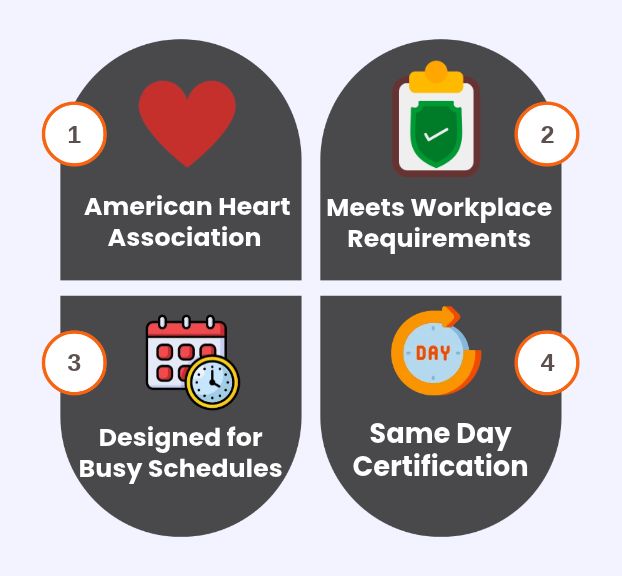
BLS, ACLS, and PALS address different levels and patient populations within healthcare resuscitation. Healthcare providers use these skills in hospitals, clinics, emergency departments, ambulances, operating rooms, intensive care units, outpatient facilities, and other clinical environments.
BLS provides the foundation for high-quality CPR and immediate life support. The AHA BLS course covers CPR, AED use, and ventilation and is available for healthcare professionals in both prehospital and in-facility settings.
ACLS builds on BLS skills and focuses on adult cardiopulmonary emergencies. The course addresses cardiac arrest, respiratory arrest, arrhythmias, acute coronary syndromes, stroke, and other cardiovascular emergencies. It also emphasizes high-performance team dynamics and coordinated resuscitation.
PALS focuses on infants and children experiencing serious respiratory, cardiovascular, and cardiopulmonary emergencies. The course addresses recognition and intervention for respiratory distress and failure, shock, arrhythmias, cardiac arrest, and post-cardiac arrest care.
For healthcare providers, these certifications correspond to different clinical responsibilities. A provider working with adult cardiac emergencies may need BLS and ACLS, while a provider regularly managing pediatric emergencies may also need PALS.
Important: Healthcare provider certification requirements in Utah vary by profession, employer, facility, role, and scope of practice. Always verify which CPR, BLS, ACLS, PALS, and other training or credentialing courses are required by your specific healthcare employer or organization before registering.
Healthcare providers can encounter cardiac and respiratory emergencies in virtually every clinical environment. A patient can deteriorate in an emergency department, hospital room, operating room, clinic, treatment area, ambulance, or outpatient setting.
A hospitalized patient can suddenly become pulseless or unresponsive because of cardiac disease, respiratory failure, sepsis, medication complications, electrolyte abnormalities, or other acute conditions. Healthcare providers must recognize cardiac arrest quickly, initiate high-quality CPR, activate the appropriate emergency response system, and use an AED or defibrillator according to their clinical role.
Respiratory deterioration can progress to respiratory arrest in patients with airway obstruction, severe asthma, COPD exacerbation, overdose, pneumonia, respiratory failure, or other acute conditions. Healthcare providers may need to provide ventilation and transition to CPR when cardiac arrest develops.
Patients presenting with chest pain, myocardial infarction, or other acute coronary syndromes require rapid assessment and appropriate intervention. Healthcare providers with ACLS responsibilities must recognize life-threatening cardiovascular conditions and participate in coordinated emergency management.
Patients can develop bradycardia, tachycardia, or other abnormal rhythms that require immediate assessment and treatment. ACLS training prepares healthcare professionals to recognize and manage adult cardiovascular emergencies involving unstable rhythms.
Healthcare providers may be responsible for recognizing signs of acute stroke and initiating the appropriate emergency response. ACLS training includes stroke recognition and management within the adult cardiovascular emergency framework.
Healthcare providers working with children can encounter respiratory failure, shock, cardiac arrest, and other rapidly deteriorating conditions. PALS training specifically prepares healthcare professionals to recognize and intervene in pediatric respiratory and cardiovascular emergencies.
A patient can deteriorate suddenly in an emergency department, hospital room, clinic, procedure area, or other healthcare environment. Providers need current resuscitation skills to respond immediately.
Healthcare professionals may have defined roles during a resuscitation, including chest compressions, ventilation, AED or defibrillator operation, rhythm recognition, medication administration, airway management, documentation, or team leadership.
Healthcare providers managing adult cardiac emergencies need skills beyond basic CPR. ACLS addresses adult cardiac arrest, arrhythmias, acute coronary syndromes, stroke, respiratory arrest, and coordinated resuscitation.
Infants and children have different emergency assessment and treatment considerations. PALS focuses specifically on pediatric respiratory emergencies, shock, arrhythmias, cardiopulmonary arrest, and post-cardiac arrest care.
Hospitals, healthcare systems, EMS organizations, clinics, and other employers can establish specific life support certification requirements for their staff. Healthcare professionals should confirm the exact AHA course required for their position before registering.
Healthcare organizations often need to train physicians, nurses, advanced practice providers, technicians, therapists, EMS personnel, and other clinical staff while maintaining patient-care operations.
Utah CPR Classes provides on-site CPR, BLS, ACLS, and PALS training for eligible healthcare organizations and groups. On-site training can help healthcare facilities coordinate certification around clinical schedules, staffing requirements, department coverage, and shift rotations.
On-site training may be useful for:
Utah CPR Classes provides American Heart Association BLS, ACLS, and PALS training for eligible healthcare professionals. Participants who successfully complete the applicable course requirements receive the corresponding AHA course completion card.
BLS, ACLS, and PALS address resuscitation skills used by healthcare professionals in clinical and emergency environments. Providers can select the course that matches their patient population and clinical responsibilities.
Healthcare professionals often work rotating shifts, nights, weekends, and extended hours. Available blended-learning options allow participants to complete the online portion before completing the required hands-on skills training. The AHA offers HeartCode BLS, ACLS, and PALS blended-learning options.
Resuscitation requires practical performance. Hands-on training allows healthcare providers to practice CPR, AED use, ventilation, and coordinated emergency response rather than relying solely on theoretical instruction.
Available training locations throughout Utah make it easier for healthcare providers to choose a course location that fits their hospital, clinic, commute, work schedule, and certification timeline.
Complete your BLS, ACLS, or PALS online coursework


Keep your CPR and advanced life support credentials current with Utah CPR Classes. Whether your employer requires BLS, ACLS, PALS, or multiple AHA certifications, you can choose the training that matches your healthcare role and workplace requirements.
Enroll today to complete or renew the AHA life support certification required for your healthcare position and stay prepared for cardiac arrest, respiratory emergencies, acute cardiovascular events, pediatric emergencies, and other life-threatening clinical situations.
Yes. Healthcare providers must have a current AHA BLS Provider certification before taking ACLS or PALS.
Yes. A healthcare provider can maintain all three AHA credentials when their professional responsibilities require BLS, adult advanced life support, and pediatric advanced life support. Each course addresses a different scope of resuscitation care.
AHA BLS, ACLS, and PALS course completion cards are valid for two years. Healthcare providers should complete the appropriate renewal training before their current card expires when their employer or professional role requires continuous certification.
No. A current AHA BLS Provider credential is not normally tied to one employer. However, healthcare organizations can establish additional training, documentation, or credentialing requirements for their employees.