Lifeguards in Utah need current CPR, AED, resuscitation, and first aid training for their emergency response responsibilities. Heartsaver First Aid CPR AED is designed for people who need CPR, AED, and first aid training for employment or other requirements, while AHA BLS is appropriate for lifeguards whose employer or aquatic facility specifically requires healthcare-level basic life support training. Lifeguarding certification is a separate credential from CPR, BLS, AED, and first aid training.
Utah public-pool rules require lifeguards to have professional-level CPR, AED, resuscitation, and first aid training in addition to qualifying lifeguarding certification. Aquatic facilities can also establish specific certification requirements for their lifeguard staff.
If your employer requires BLS, Heartsaver First Aid CPR AED, or another AHA life support course, you can complete the applicable training through Utah CPR Classes and maintain the credentials required for your lifeguard role.
Lifeguards respond to emergencies in swimming pools, aquatic centers, water parks, recreation facilities, hotels, universities, and other aquatic environments. Their emergency training needs focus on rapid recognition, water rescue, CPR, AED use, rescue breathing, and first aid.
Heartsaver First Aid CPR AED provides CPR, AED, and first aid training for people with little or no medical training who need these skills for employment or other requirements. The course covers CPR, AED use, choking response, and first aid skills relevant to workplace and community responders.
BLS provides a higher level of basic life support training for healthcare professionals and other personnel who need to respond to life-threatening emergencies as part of their professional responsibilities. Lifeguards working for facilities that specifically require AHA BLS can complete the BLS Provider course to meet that requirement.
CPR and AED training prepares lifeguards to recognize cardiac arrest, begin CPR, provide rescue breaths, and operate an AED during a life-threatening emergency. These skills are particularly important when a swimmer becomes unresponsive in or around the water.
First aid training prepares lifeguards to respond to injuries and medical emergencies that do not require CPR. Lifeguards regularly encounter cuts, bleeding, burns, falls, sprains, fractures, and other pool-deck injuries.
Lifeguarding certification remains separate from AHA CPR, BLS, AED, and first aid training. Lifeguards need the lifeguarding credential required by their employer or applicable Utah requirements in addition to the required emergency-response training.
Important: Lifeguard CPR and emergency-response certification requirements vary by aquatic facility, employer, jurisdiction, position, and job responsibilities. Always verify which training, certification, and credentialing courses are required by the specific aquatic facility or employer before registering.
Lifeguards work in environments where a medical emergency can develop within seconds. A rescue can quickly become a CPR or advanced emergency response situation.
A swimmer who has been submerged can require immediate rescue, assessment, rescue breathing, CPR, and AED use. Lifeguards must transition quickly from water rescue to emergency care when the victim is unresponsive or not breathing normally.
A swimmer can experience cardiac arrest while swimming, diving, exercising, or participating in aquatic activities. Lifeguards may need to remove the person from the water, activate EMS, begin CPR, and retrieve and use an AED.
A swimmer can develop severe breathing problems after a water-related emergency, asthma episode, choking incident, or other medical event. Lifeguards need appropriate rescue breathing and emergency response skills while waiting for EMS.
A diving accident can result in serious head, neck, or spinal injuries. Lifeguards must follow their facility’s emergency action plan and use the appropriate rescue and first-aid procedures.
Children and adults can experience choking in pool areas, locker rooms, concession areas, and other parts of an aquatic facility. Lifeguards need to recognize choking and provide the appropriate emergency response.
Wet surfaces, diving boards, ladders, and other aquatic equipment can contribute to falls, cuts, fractures, sprains, and other injuries. Lifeguards frequently provide first aid while determining whether additional medical assistance is required.
A lifeguard may be the first trained responder to reach a distressed or unresponsive swimmer. Immediate rescue breathing, CPR, and AED use are critical when a victim is not breathing normally or is in cardiac arrest.
Lifeguards monitor swimmers and respond directly when an emergency occurs. Their responsibilities can include water rescue, removing a victim from the water, activating EMS, beginning CPR, providing rescue breaths, using an AED, and providing first aid.
A successful water rescue does not end the emergency response. A rescued swimmer can remain unresponsive or have abnormal breathing and require immediate resuscitation.
Lifeguards also respond to emergencies on pool decks, in locker rooms, near diving boards, in recreation areas, and throughout aquatic facilities.
Not every lifeguard position requires BLS, but facilities can establish BLS as an employment requirement. Lifeguards should verify whether their employer requires AHA BLS or another specific CPR credential before registering.
Aquatic facilities often need to train multiple lifeguards, pool managers, supervisors, swim instructors, and other staff while maintaining normal facility operations.
Utah CPR Classes provides on-site CPR, BLS, AED, and first aid training for eligible organizations and groups. Bringing training to an aquatic facility helps coordinate certification around pool operating hours, seasonal hiring, staff rotations, and facility schedules.
On-site training is suitable for:
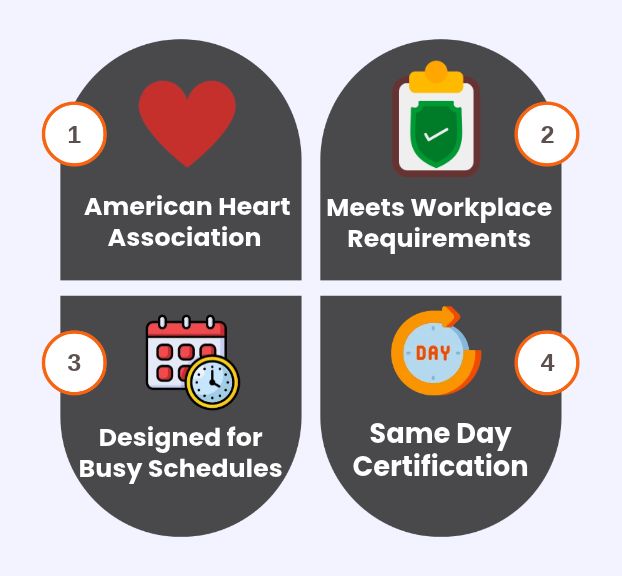
Get recognized American Heart Association certification through eligible Heartsaver First Aid CPR AED and BLS courses. This provides a trusted credential for lifeguards and professionals who need current CPR training.
Training focuses on emergency situations lifeguards may encounter, including drowning, cardiac arrest, breathing emergencies, choking, and injuries, helping participants prepare for real-world response situations.
Choose from available weekday, evening, weekend, and other scheduling options to make certification easier to fit around work, school, and seasonal lifeguard responsibilities.
Blended-learning options can reduce the amount of time you need to spend at the training location while still providing the required hands-on instruction and skills evaluation.
Streamlined course options help eligible participants complete their training requirements efficiently, making it convenient for those who need certification for work or upcoming lifeguard employment.
Complete your BLS, ACLS, or PALS online coursework


Stay certified, confident, and prepared for emergencies with CPR, BLS, AED, and first aid training from Utah CPR Classes. Choose the course that meets your workplace or aquatic facility requirements and complete your training with convenient learning options.
Enroll today and keep your lifesaving skills ready when they matter most.
No. AHA BLS provides basic life support training but does not replace the lifeguarding certification required for a lifeguard position. Lifeguards need the specific lifeguarding credential required by their employer or facility.
ACLS and PALS are not standard lifeguard certifications. They are advanced life support courses intended for healthcare professionals and other personnel whose professional responsibilities require those skills. A lifeguard should complete ACLS or PALS only when a separate employer or professional role specifically requires it.
A fully online CPR course does not provide the hands-on skills evaluation included in an AHA blended-learning course. When an AHA blended-learning course is selected, participants complete the online portion and then complete the required hands-on skills session.
AHA BLS and Heartsaver course completion cards are generally valid for two years after successful completion of the applicable course requirements. Employers can establish their own renewal requirements.