Emergency response teams in Utah generally need current BLS certification for professional CPR and resuscitation responsibilities, while ACLS is appropriate for team members who manage adult cardiac and cardiovascular emergencies, and PALS is appropriate for personnel who respond to pediatric emergencies. BLS provides the foundation for high-quality CPR, AED use, ventilation, and team resuscitation. ACLS focuses on adult cardiovascular emergencies, while PALS addresses serious respiratory, cardiovascular, and cardiac arrest emergencies in infants and children.
The appropriate emergency response certification varies according to an individual’s professional duties, healthcare setting, patient age group, organizational policies, and applicable workplace or EMS standards. Before enrolling in a course, responders should consult their employer or organization to confirm whether BLS, ACLS, PALS, or another credential is required for their role.
If you need BLS, ACLS, or PALS certification, you can get certified through available courses today and stay prepared to respond when a life-threatening emergency occurs.
Effective emergency care depends on responders having the right level of training for the situations and patients they may encounter. BLS, ACLS, and PALS certifications provide different levels of preparation and can work together to strengthen an emergency response team.
Basic Life Support (BLS) establishes the essential skills needed during the first few minutes of a medical emergency. Training commonly includes recognizing cardiac arrest, performing high-quality CPR, using an automated external defibrillator (AED), providing effective ventilation, and responding to choking. BLS also emphasizes early intervention and communication among team members, making it relevant for healthcare professionals and other personnel who may be first to respond.
Advanced Cardiovascular Life Support (ACLS) provides more advanced training for managing serious cardiovascular emergencies in adults. In addition to reinforcing CPR and defibrillation skills, ACLS covers structured approaches to cardiac arrest, abnormal heart rhythms, acute coronary syndromes, stroke, and other critical conditions. Participants learn how to assess a patient’s condition, coordinate resuscitation efforts, and use advanced interventions as appropriate to their professional role.
Pediatric Advanced Life Support (PALS) is designed for healthcare providers caring for infants and children experiencing serious illness or injury. The course emphasizes early identification of pediatric deterioration and appropriate management of problems such as respiratory failure, shock, cardiac arrest, bradycardia, and tachycardia. Pediatric assessment and age-specific emergency interventions are important components of this training.
For an emergency response team, certification requirements should be matched to the population served, clinical environment, expected emergencies, and responsibilities of each team member.
Important: Emergency response team certification requirements vary by organization, workplace, role, industry, and jurisdiction. Always verify which CPR, BLS, AED, first aid, and other emergency-response training or credentials are required by your specific organization before registering.
Emergency response teams may be responsible for providing the first organized medical response when a person suddenly becomes critically ill or injured. Their response environment can include factories, warehouses, construction sites, offices, schools, campuses, public venues, transportation facilities, and large events.
Common situations requiring immediate CPR or resuscitation skills include:
A worker, visitor, student, customer, or member of the public can suddenly become unresponsive and stop breathing normally. Emergency response personnel must recognize cardiac arrest, begin CPR, retrieve and apply an AED, and coordinate the response until EMS arrives.
Industrial facilities can involve machinery incidents, falls, electrical injuries, crush injuries, and other serious accidents. Emergency response teams may need to provide immediate CPR or resuscitation while additional emergency resources are activated.
Emergency response personnel with ACLS responsibilities may encounter cardiac arrest, acute coronary syndromes, stroke, unstable tachycardia, bradycardia, and other serious cardiovascular emergencies. Rapid recognition and coordinated treatment are essential during these events.
Emergency response teams working at schools, campuses, recreational facilities, family venues, and other locations may respond to children experiencing respiratory distress, choking, shock, drowning, or cardiac arrest. PALS training focuses specifically on recognizing and managing these pediatric emergencies.
A complete airway obstruction can rapidly become life-threatening. Emergency responders need to recognize severe choking and provide the appropriate response for adults, children, and infants.
Emergency response teams at concerts, sporting events, festivals, conventions, and other large gatherings may respond to cardiac arrest, respiratory emergencies, trauma, and sudden medical deterioration in crowded environments.
When cardiac arrest occurs, emergency responders must begin CPR and use an AED as quickly as possible rather than waiting for hospital-based treatment.
Emergency teams may respond to machinery accidents, workplace collapses, public events, vehicle incidents, fires, falls, drowning, choking, and sudden medical emergencies.
Multiple responders may need to divide responsibilities between chest compressions, ventilation, AED operation, emergency communications, scene management, and coordination with arriving EMS personnel.
BLS establishes the foundation for CPR and resuscitation, while ACLS and PALS provide additional training for responders responsible for adult cardiovascular and pediatric emergencies.
Organizations may establish BLS, ACLS, PALS, or multiple certification requirements based on the emergency response team’s responsibilities, patient population, and operational environment.
Emergency response organizations often need to train multiple responders without disrupting facility operations or leaving critical positions unstaffed.
On-site CPR, BLS, ACLS, and PALS training provides an option for organizations that need to coordinate certification around shifts, emergency coverage, facility operations, and team availability.
On-site training may be useful for:
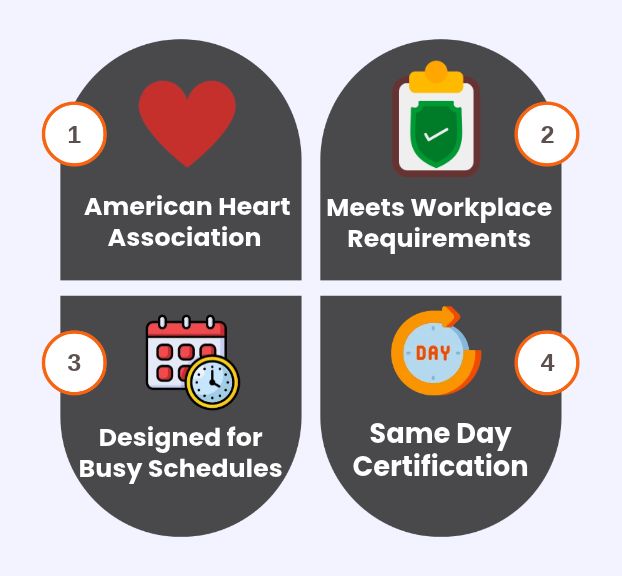
Utah CPR Classes offers American Heart Association BLS, ACLS, and PALS training for eligible healthcare and emergency response professionals.
Practice essential resuscitation skills with voice-assisted manikins that provide real-time prompts and feedback during hands-on training, helping you follow proper CPR techniques and procedures.
Gain practical experience performing CPR, AED use, ventilation, and other essential resuscitation skills using training equipment.
Streamlined course options allow eligible participants to complete their required training efficiently and keep their credentials current.
Where included with the selected course, participants may have additional opportunities to repeat required skills if needed to successfully complete the course.
Complete your BLS, ACLS, or PALS online coursework


Stay current with the BLS, ACLS, and PALS certifications required for your emergency response role. Utah CPR Classes offers flexible AHA training options to help you meet your organization’s certification requirements.
Enroll today to complete or renew your certification and stay prepared to respond when critical emergencies occur.
Some emergency response roles require more than one AHA credential based on the responder’s duties, patient population, and organization’s requirements. For example, a responder may need BLS along with ACLS or PALS when their responsibilities include advanced adult or pediatric emergency care.
No. ACLS does not replace the foundational CPR and resuscitation skills covered by BLS. Emergency response personnel who require ACLS should also maintain the BLS skills and credentials required for their role and organization.
Yes. BLS is a professional-level resuscitation course that covers more than basic CPR awareness. It includes CPR, AED use, ventilation, and coordinated response skills intended for personnel with professional or organizational emergency response responsibilities.